Explore Manu National Park 9 Days

AMAZON BIRDING – THE ULTIMATE IN WILDLIFE TOURS IN MANU
Manu National Park has the highest biodiversity of any protected area in the world. The unparalleled beauty of this trip is in the landscape and variety of habitats ranging from orchid-draped cloud forest where Spectacled Bears and Cock-of-the-Rocks still exist unbothered, to pristine Amazon rainforest with 13 primate species and oxbow lakes frequented by Giant Otters. A trip to Manu is a trip to one of the world´s great wilderness areas where wildlife is still plentiful and over 1000 species of birds have been recorded. Add to this a breathtaking visit to Machu Picchu and you have a trip of a lifetime.

TOUR ITINERARY: 9 DAYS AND 8 NIGHTS.

EXPLORE MANU NATIONAL PARK: Cloud forest, Oxbow Lakes, Tapir & Macaw Clay Licks.

Day 00: Lima-Cusco (3360m).

Depending on arrival time in Lima we either transfer to our hotel in Lima or connect to Cusco.

Day 01: Cusco to Paradise Lodge (Lower Manu cloud forest 1400m).

Today we will leave early, first driving through scenic intermontane valleys. We will make selected stops for the Lupacas Pre-Inca cemetery and Paucartambo village. Reaching a high mountain pass at Ajanaco, we will begin our journey into a vast intact wilderness area as we descend along the sinuous road that will take us to the Manu foothills.

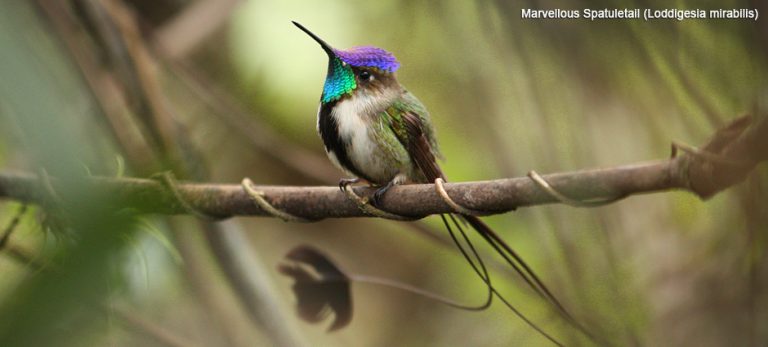
Along the extraordinary altitudinal transect that this remarkable road represents, new wildlife species continually appear whilst others drop out. Initially, the steep Andean slopes are clad in stunted forest, temperate shrubbery and wet paramo, and here we may well encounter such high-elevation species as Mountain Caracara, Shining Sunbeam and Moustached Flower-piercers. A little lower down, where the magnificent cloudforests begin, we shall look out for the beautiful Orchids and the famous Andean cock-of-the-Rock at the Lek, proclaimed as Peru´s national bird. With a little luck we will see a Woolly Monkey and Brown capuchin Monkeys. We will stay for one night at the Paradise Lodge. Optional night walk in Lower Manu-cloudforest. L:D.

Day 02: Paradise Lodge to Hummingbird Lodge.

After a final morning in the cloudforest we will descend further down the Manu road to Atalaya port. From here we shall continue our river journey, dawn the Alto Madre de Dios River, leaving behind the green ridges of the foothills as we delve deeper into the humid lowlands. Here in the strict confines of Manu Biosphere, Black Skimmers, Sand-coloured Nighthawks and the bizarre Orinoco Goose on the sandbars.

Careful scanning of the river edge may reveal the awkward shape of a Great Black-Hawk, or the reddish brown of a Capybara, the world´s largest rodent. With just a little luck on our side we should also be able to spot the stately Razor-billed Curassow, a species driven to near-extinction in large parts of Amazonia but still reasonably common here. Raucous Blue-and yellow, Scarlet and Red-and-green Macaws float overhead, clothed in a riot of colours. Eventually we will arrive at the comfortable Hummingbird Lodge for one night stay, with optional night walk. B:L:D.

Day 03: Hummingbird Lodge to Matsiguenka camping Lodge.

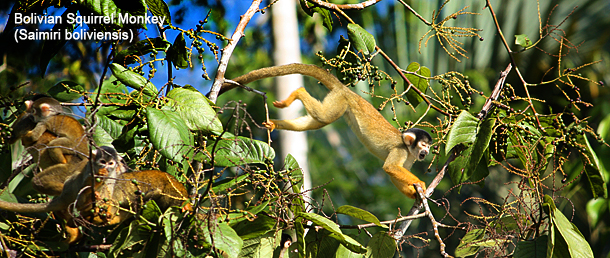
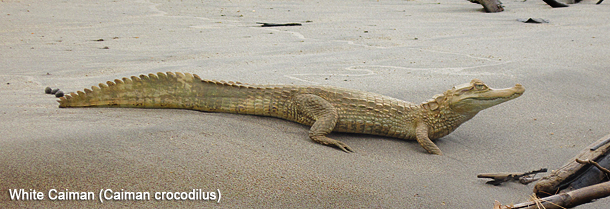
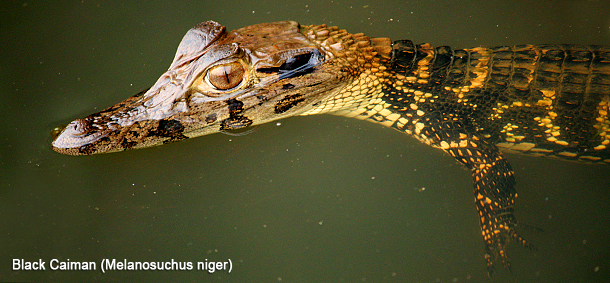
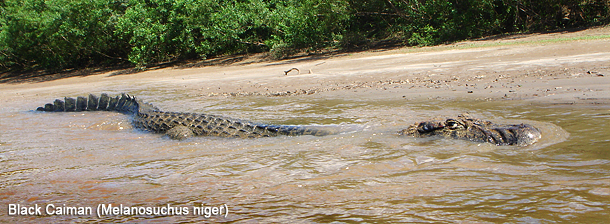
Today we shall continue our river journey. Eventually we will reach the clay-laden waters of the meandering Manu River and head upstream. Here in the strict confines of Manu National Park, Black spider Monkeys, Bolivian squirrel Monkeys and the bizarre Orinoco Goose nest on the sandbars, whilst Black Caiman and White Caimans lazily sun themselves nearby.

Careful scanning of the river edge may reveal the awkward shape of a Great Black-Hawk, the flash of a Sunbittern or the reddish brown of a Capybara, the world´s largest rodent. With just a little luck on our side we should also be able to spot the stately Jaguar (Panthera onca), a species driven to near-extinction in large parts of Amazonia but still reasonably common here. Raucous Blue-and yellow, Scarlet and Red-and-green Macaws float overhead, clothed in a riot of colours.

Today before to arrive to our camping lodge we will explore the trails and the small tower good place to enjoy the scenery at Otorongo Oxbow Lake. Late in the afternoon we will arrive to the comfortable Matsiguenka Camping Lodge for a two nights stay, with optional night walks. Here we will meet the Matsiguenka natives B:L:D.

Day 04: Exploring Salvador Oxbow Lake.

We strart with a Red Howler Monkey (Alouatta sara) announcing the new day with its loud song. During the first hours of the day many shy understorey denizens proclaim their territorial rights with their characteristic songs. Located in the vast virgin rainforest of Manu National Park, the Matsiguenka Camping Lodge gives access to several distinct habitats including the nearby Salvador oxbow lake. Here a small catamaran allows us to float gently by the lake edge and marvel at its sensational bird and animal life.

We even have a very good chance of encountering a friendly family group of the endangered Giant Otter (Pteronura brasiliensis) actively fishing in their aquatic environment, Clumsy Hoatzins clamber about in giant arum plants and Black-capped Donacobiuses perform their loud duets, whilst overhead Blue-headed, Yellow-crowned and Mealy Parrots squawk their way to or from their roosts. Entering the primeval Amazonian forest is a strange and captivating experience. Lianas hang in loops and tangles from the canopy, through which the biggest trees emerge to stand in full sunlight. We shall rise early each morning as most forest inhabitants are at their peak of activity from around dawn to about midday.

Mammals too roam the forest and Manu National Park is probably the best place to see a large variety of New World primates. As many as thirteen species of monkey share the canopy and regularly seen species include the Bolivian Squirrel Monkeys, the curious Brown and White-fronted Capuchin Monkeys, the acrobatic Black Spider Monkey, the little Saddle-back Tamarin and the lethargic Red Howler. These forests are the most accessible in all of Amazonia for the incomparable Emperor Tamarin. Night at Matsiguenka Camping Lodge, optional night walk. B:L:D.

Day 05: Matsiguenka camping Lodge to Manu Birding Lodge.

After some final in Manu National Park we will travel back down the Manu River to its junction with the Alto Madre de Dios River. Here the water changes from quiet and tea brown to clear and fast-flowing. After travelling down the Madre de Dios River we will come to Manu Birding Lodge, with a bird list over 600 species, situated just upriver from the Blanquillo Macaw Clay Lick.

The rest of our time will be spent exploring the extensive trail systems which have been designed to visit different forest types. There will be an optional visit to the large mammal clay lick here, which can attract Tapirs, Peccaries and maybe even a Jaguar, also attracts Guans, Curasows, Chachalacas as well as Rose-fronted and Rock Parakeets and Dusky-billed Parrotlet. Manu Birding Lodge our base for the next three nights, with optional night walks. B:L:D.

Day 06: Macaw Clay Lick & Tapir Clay Lick.

We start early morning, 40 minutes downriver to the most spectacurar and the bigest Macaw Clay lick, this one featuring up to 100 Red-and-green Macaws and observe the spectacle of hundreds of Parrots and Parakeets very close from our blinds. Red-and-green Macaw is a highlight. Here we will see the beautiful Orange-cheeked Parrrot, Blue-headed Parrot as well as Mealy and Yellow-crowned Parrots. Smaller visitors include White-eyed, Cobalt-winged and Tui Parakeets.

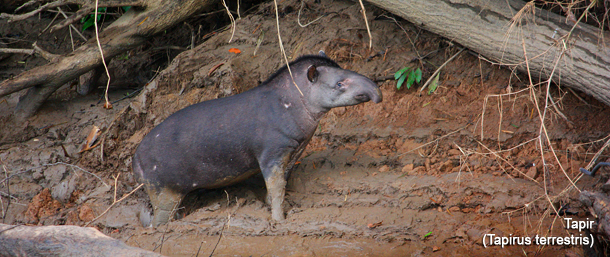
We´ll use a blind (hide) to get close to the birds. Breakfast at the blind. The noise alone is incredible and the sight of these brightly colored birds at the lick is a sight not to be forgotten. This afternoon we will walk about 50 minutes through the forest is a large mammal clay lick where Tapirs (Tapirus terrestris), the largest South American land mammal, regularly come for minerals. At night Red-brocket Deer, Bicolor-spined Porcupine, Paca and other animals share this necessary ingredient to the digestive system. There is a large, raised blind here equipped with mattresses and mosquito nets for those who want to spend the night in comfort observing these nocturnal creatures.

During the day several species of Rose-fronted and Rock Parakeets and Dusky-billed Parrotlet as well as Spix´s and Blue-throated Pinping Guans, Ruddy and Plumbeous Pigeons, Pale-winged Trumpeter, Razor-billed Curassow and White-lipped and Collared Pecaries, Southern Amazon Red Squirrel, Amazon Dwarf Squirrel, Brown Agouti, Red Howler and Black Spider Monkeys regularly visit the clay lick. Night at Manu Birding Lodge. B:L:D.

Day 07 and 08: Exploring Manu Birding Lodge.

The call of the Red Howler Monkeys will wake us up for the delicious breakfast, then we will be exploring the extensive trail systems which have been designed to visit different forest types. The area around this lodge has the most forest types of anywhere in the Manu area, and thus the highest bio-diversity – which means the most species of flora and fauna. With the extensive Varzea, virgin raiforest and Mature Transitional Floodplain Forest, this means a mind-boggling variety of wildlife.

We expect this lodge area to hold more species of birds than anywhere else in the world and the bird list is already 567 species. We may see Emperor and Saddleback Tamarins, Monk Saki Monkey, Black Spider Monkey, Brown and White-fronted Capuchin Monkeys, Bolivian Squirrel monkey, Dusky Titi Monkey and for the optional night walks the Night Monkey or visit the Tapir clay lick. Nights at Manu Birding Lodge.B:L:D

Day 09: Manu Birding Lodge to Cusco.

Starting early this morning on our comfortable boat we will have one last look at the numerous parrot flocks for which Manu is famous. The first part of our journey down the Madre de Dios River will give us another opportunity to see riverside wildlife activity. Leaving our boat, we will take a local car from Boca Colorado to pto Carlos and we will cross the Inanvari River with a local boat, then we´ll drive back to Cusco, transfer to your Hotel and your tour Manu National Park ends. B:L.

Day 10: Machu Picchu or flight home.

TOUR INFORMATION

PRICE: $3590 per person. (min. 2 passengers) based in double occupancy.

INCLUDED:

  • All Meals, snacks, drinking water (vegetarian on request). B:L:D.
  • All lodging with private bathroom & Hot and cold shower.
  • Private transportation ( bus / van & boat)
  • Professional expert bilingual Natural History Guide with a spotting scope.
  • Hotel transfer and entrance fees.
  • First Aid Kit with a poison extractor.
  • Flora and fauna check list

NOT INCLUDED: Personal expenses

TRIP CONSIDERATIONS

CLIMATE: Hot and humid in the lowlands to very cold at the Andes. This is a dry season tour, but there is the possibilty of a «Friaje», a strong cold front moving up from the south that can bring periods of unusually cool weather and rain.

DIFFICULTY: Easy to Moderate. There are some long journeys and early starts, but the walking is usually fairly easy.

ACCOMMODATION: The jungle lodges are comfortable but simple; some do not have full-time electricity, but provide a generator for a few hours a day to charge batteries.Matsiguenka Camping Lodge in the Reserved Zone of Manu National Park has shared bathroom facilities and cold shower. Paradise Lodge and Manu Birding Lodge consists in double rooms with a private toilet and shower facilities. Hot and cold water is always available and all toilets facilities are flush.

Wildlife Photography: Opportunities are worthwhile.

What to Bring

We advise you to bring:

  • Besides from Binoculars and photo-equipment (the important Wildlife Enthusiast stuff) we advise:
  • Flashlight for night walk
  • Light day pack
  • A bottle or canteen to carry water on outings
  • Sunscreen and insect repellent
  • T-shirts and a long-sleeved shirt
  • Jeans or other cotton pants are comfortable, as well as quick-drying nylon ones
  • Cotton socks
  • Light jacket, water resistant, or poncho
  • Hiking boots or sturdy shoes
  • Sandals for after hours
  • Hat that will not come off in windy boat rides and sunglasses
  • Plastic bags for camera, clothes, etc
  • Personal toiletries (shampoo, towel, etc)

NOTE: In rainy season we provide umbrella and rubber boots in many popular sizes for rainy days. 

Amazon Birding look forward to welcoming and guiding you soon!

Last minute bookings will be accepted but you must be aware that there is the possibility that we will not get space at the lodge or tour that you need.

PLEASE CONTACT US IF YOU HAVE ANY QUESTIONS.
AMAZON BIRDING: Conservation through bird-ecotourism.
Explore Manu National Park 8 Days

AMAZON BIRDING – THE ULTIMATE IN WILDLIFE TOURS IN MANU
Manu National Park has the highest biodiversity of any protected area in the world. The unparalleled beauty of this trip is in the landscape and variety of habitats ranging from orchid-draped cloud forest where Spectacled Bears and Cock-of-the-Rocks still exist unbothered, to pristine Amazon rainforest with 13 primate species and oxbow lakes frequented by Giant Otters. A trip to Manu is a trip to one of the world´s great wilderness areas where wildlife is still plentiful and over 1000 species of birds have been recorded. Add to this a breathtaking visit to MachuPicchu and you have a trip of a lifetime.

TOUR ITINERARY: 8 DAYS AND 7 NIGHTS

EXPLORE MANU NATIONAL PARK: Cloud forest, Oxbow Lakes, Tapir & Macaw Clay Licks.

Day 00: Lima-Cusco (3360m).

Depending on arrival time in Lima we either transfer to our hotel in Lima or connect to Cusco.

Day 01: Cusco to Paradise Lodge (Lower Manu cloud forest 1400m).

Today we will leave early, first driving through scenic intermontane valleys. We will make selected stops for the Lupacas Pre-Inca cemetery and Paucartambo village. Reaching a high mountain pass at Ajanaco, we will begin our journey into a vast intact wilderness area as we descend along the sinuous road that will take us to the Manu foothills.

Along the extraordinary altitudinal transect that this remarkable road represents, new wildlife species continually appear whilst others drop out. Initially, the steep Andean slopes are clad in stunted forest, temperate shrubbery and wet paramo, and here we may well encounter such high-elevation species as Mountain Caracara, Shining Sunbeam and Moustached Flower-piercers. A little lower down, where the magnificent cloudforests begin, we shall look out for the beautiful Orchids and the famous Andean cock-of-the-Rock at the Lek, proclaimed as Peru´s national bird. With a little luck we will see a Woolly Monkey and Brown capuchin Monkeys. We will stay for one night at the Paradise Lodge. Optional night walk in Lower Manu-cloudforest. L:D.

Day 02: Paradise Lodge to Hummingbird Lodge.

After a final morning in the cloudforest we will descend further down the Manu road to Atalaya port. From here we shall continue our river journey, dawn the Alto Madre de Dios River, leaving behind the green ridges of the foothills as we delve deeper into the humid lowlands. Here in the strict confines of Manu Biosphere, Black Skimmers, Sand-coloured Nighthawks and the bizarre Orinoco Goose on the sandbars.

Careful scanning of the river edge may reveal the awkward shape of a Great Black-Hawk, or the reddish brown of a Capybara, the world´s largest rodent. With just a little luck on our side we should also be able to spot the stately Razor-billed Curassow, a species driven to near-extinction in large parts of Amazonia but still reasonably common here. Raucous Blue-and yellow, Scarlet and Red-and-green Macaws float overhead, clothed in a riot of colours. Eventually we will arrive at the comfortable Hummingbird Lodge for one night stay, with optional night walk. B:L:D.

Day 03: Hummingbird Lodge to Matsiguenka camping Lodge.

Today we shall continue our river journey. Eventually we will reach the clay-laden waters of the meandering Manu River and head upstream. Here in the strict confines of Manu National Park, Black spider Monkeys, Bolivian squirrel Monkeys and the bizarre Orinoco Goose nest on the sandbars, whilst Black Caiman and White Caimans lazily sun themselves nearby.

Careful scanning of the river edge may reveal the awkward shape of a Great Black-Hawk, the flash of a Sunbittern or the reddish brown of a Capybara, the world´s largest rodent. With just a little luck on our side we should also be able to spot the stately Jaguar (Panthera onca), a species driven to near-extinction in large parts of Amazonia but still reasonably common here. Raucous Blue-and yellow, Scarlet and Red-and-green Macaws float overhead, clothed in a riot of colours.

Today before to arrive to our camping lodge we will explore the trails and the small tower good place to enjoy the scenery at Otorongo Oxbow Lake. Late in the afternoon we will arrive to the comfortable Matsiguenka Camping Lodge for a two nights stay, with optional night walks. Here we will meet the Matsiguenka natives B:L:D.

Day 04: Exploring Salvador Oxbow Lake.

We strart with a Red Howler Monkey (Alouatta sara) announcing the new day with its loud song. During the first hours of the day many shy understorey denizens proclaim their territorial rights with their characteristic songs. Located in the vast virgin rainforest of Manu National Park, the Matsiguenka Camping Lodge gives access to several distinct habitats including the nearby Salvador oxbow lake. Here a small catamaran allows us to float gently by the lake edge and marvel at its sensational bird and animal life.

We even have a very good chance of encountering a friendly family group of the endangered Giant Otter (Pteronura brasiliensis) actively fishing in their aquatic environment, Clumsy Hoatzins clamber about in giant arum plants and Black-capped Donacobiuses perform their loud duets, whilst overhead Blue-headed, Yellow-crowned and Mealy Parrots squawk their way to or from their roosts. Entering the primeval Amazonian forest is a strange and captivating experience. Lianas hang in loops and tangles from the canopy, through which the biggest trees emerge to stand in full sunlight. We shall rise early each morning as most forest inhabitants are at their peak of activity from around dawn to about midday.

Mammals too roam the forest and Manu National Park is probably the best place to see a large variety of New World primates. As many as thirteen species of monkey share the canopy and regularly seen species include the Bolivian Squirrel Monkeys, the curious Brown and White-fronted Capuchin Monkeys, the acrobatic Black Spider Monkey, the little Saddle-back Tamarin and the lethargic Red Howler. These forests are the most accessible in all of Amazonia for the incomparable Emperor Tamarin. Night at Matsiguenka Camping Lodge, optional night walk. B:L:D.

Day 05: Matsiguenka camping Lodge to Manu Birding Lodge.

After some final in Manu National Park we will travel back down the Manu River to its junction with the Alto Madre de Dios River. Here the water changes from quiet and tea brown to clear and fast-flowing. After travelling down the Madre de Dios River we will come to Manu Birding Lodge, with a bird list over 600 species, situated just upriver from the Blanquillo Macaw Clay Lick.

The rest of our time will be spent exploring the extensive trail systems which have been designed to visit different forest types. There will be an optional visit to the large mammal clay lick here, which can attract Tapirs, Peccaries and maybe even a Jaguar, also attracts Guans, Curasows, Chachalacas as well as Rose-fronted and Rock Parakeets and Dusky-billed Parrotlet. Manu Birding Lodge our base for the next three nights, with optional night walks. B:L:D.

Day 06: Macaw Clay Lick & Tapir Clay Lick.

We start early morning, 40 minutes downriver to the most spectacurar and the bigest Macaw Clay lick, this one featuring up to 100 Red-and-green Macaws and observe the spectacle of hundreds of Parrots and Parakeets very close from our blinds. Red-and-green Macaw is a highlight. Here we will see the beautiful Orange-cheeked Parrrot, Blue-headed Parrot as well as Mealy and Yellow-crowned Parrots. Smaller visitors include White-eyed, Cobalt-winged and Tui Parakeets.

We´ll use a blind (hide) to get close to the birds. Breakfast at the blind. The noise alone is incredible and the sight of these brightly colored birds at the lick is a sight not to be forgotten. This afternoon we will walk about 50 minutes through the forest is a large mammal clay lick where Tapirs (Tapirus terrestris), the largest South American land mammal, regularly come for minerals. At night Red-brocket Deer, Bicolor-spined Porcupine, Paca and other animals share this necessary ingredient to the digestive system. There is a large, raised blind here equipped with mattresses and mosquito nets for those who want to spend the night in comfort observing these nocturnal creatures.

During the day several species of Rose-fronted and Rock Parakeets and Dusky-billed Parrotlet as well as Spix´s and Blue-throated Pinping Guans, Ruddy and Plumbeous Pigeons, Pale-winged Trumpeter, Razor-billed Curassow and White-lipped and Collared Pecaries, Southern Amazon Red Squirrel, Amazon Dwarf Squirrel, Brown Agouti, Red Howler and Black Spider Monkeys regularly visit the clay lick. Night at Manu Birding Lodge. B:L:D.

Day 07: Exploring Manu Birding Lodge.

The call of the Red Howler Monkeys will wake us up for the breakfast,then we have full day exploring the wildlife attractions at the Amazon Wildlife Center trails, today we will visit the Hummingbird Garden for Festive Coquette, Reddish Hermit, Fork tailed Woodnymph, White-chinned Sapphire, Sapphire-spangled Emerald, and more. We may see Emperor and Saddleback Tamarins, Monk Saki Monkey, Black Spider Monkey, Brown and White-fronted Capuchin Monkeys, Bolivian Squirrel monkey, Dusky Titi Monkey and for the optional night walk the Night Monkey or visit the Tapir clay lick. Nigh at Manu Birding Lodge.B:L:D.

Day 08: Manu Birding Lodge to Cusco.

Starting early this morning on our comfortable boat we will have one last look at the numerous parrot flocks for which Manu is famous. The first part of our journey down the Madre de Dios River will give us another opportunity to see riverside wildlife activity. Leaving our boat, we will take a local car from Boca Colorado to pto Carlos and we will cross the Inanvari River with a local boat, then we´ll drive back to Cusco, transfer to your Hotel and your tour Manu National Park ends. B:L.

Day 09: Machu Picchu or flight home.

TOUR INFORMATION

PRICE: US$2990 per person. (min. 2 passengers) based in double occupancy.

INCLUDED:

  • All Meals, snacks, drinking water (vegetarian on request). B:L:D.
  • All lodging with private bathroom & Hot and cold shower.
  • Private transportation ( bus / van & boat)
  • Professional expert bilingual Natural History Guide with a spotting scope.
  • Hotel transfer and entrance fees.
  • First Aid Kit with a poison extractor.
  • Flora and fauna check list

NOT INCLUDED: Personal expenses

TRIP CONSIDERATIONS

CLIMATE: Hot and humid in the lowlands to very cold at the Andes. This is a dry season tour, but there is the possibilty of a «Friaje», a strong cold front moving up from the south that can bring periods of unusually cool weather and rain.

DIFFICULTY: Easy to Moderate. There are some long journeys and early starts, but the walking is usually fairly easy.

ACCOMMODATION: The jungle lodges are comfortable but simple; some do not have full-time electricity, but provide a generator for a few hours a day to charge batteries. Matsiguenka Camping Lodge in the Reserved Zone of Manu National Park has shared bathroom facilities and cold shower. Paradise Lodge and Manu Birding Lodge consists in double rooms with a private toilet and shower facilities. Hot and cold water is always available and all toilets facilities are flush.

Wildlife Photography: Opportunities are worthwhile.

What to Bring

We advise you to bring:
Besides from Binoculars and photo-equipment (the important Wildlife Enthusiast stuff) we advise:

  • Flashlight for night walk
  • Light day pack
  • A bottle or canteen to carry water on outings
  • Sunscreen and insect repellent
  • T-shirts and a long-sleeved shirt
  • Jeans or other cotton pants are comfortable, as well as quick-drying nylon ones
  • Cotton socks
  • Light jacket, water resistant, or poncho
  • Hiking boots or sturdy shoes
  • Sandals for after hours
  • Hat that will not come off in windy boat rides and sunglasses
  • Plastic bags for camera, clothes, etc
  • Personal toiletries (shampoo, towel, etc)

NOTE: In rainy season we provide umbrella and rubber boots in many popular sizes for rainy days.

Amazon Birding look forward to welcoming and guiding you soon!
Last minute bookings will be accepted but you must be aware that there is the possibility that we will not get space at the lodge or tour that you need.

PLEASE CONTACT US IF YOU HAVE ANY QUESTIONS.
AMAZON BIRDING: Conservation through bird-ecotourism.
Explore Manu National Park 7 Days

AMAZON BIRDING – THE ULTIMATE IN WILDLIFE TOURS IN MANU
Manu National Park has the highest biodiversity of any protected area in the world. The unparalleled beauty of this trip is in the landscape and variety of habitats ranging from orchid-draped cloud forest where Spectacled Bears and Cock-of-the-Rocks still exist unbothered, to pristine Amazon rainforest with 13 primate species and oxbow lakes frequented by Giant Otters. A trip to Manu is a trip to one of the world´s great wilderness areas where wildlife is still plentiful and over 1000 species of birds have been recorded. Add to this a breathtaking visit to MachuPicchu and you have a trip of a lifetime.

TOUR ITINERARY: 6 DAYS AND 5 NIGHTS

EXPLORE MANU NATIONAL PARK: Oxbow Lakes, Tapir & Macaw Clay Licks.

Day 00: Lima-Cusco (3360m).

Depending on arrival time in Lima we either transfer to our hotel in Lima or connect to Cusco.

Day 01: Cusco to Paradise Lodge (Lower Manu cloud forest 1400m).

Today we will leave early, first driving through scenic intermontane valleys. We will make selected stops for the Lupacas Pre-Inca cemetery and Paucartambo village. Reaching a high mountain pass at Ajanaco, we will begin our journey into a vast intact wilderness area as we descend along the sinuous road that will take us to the Manu foothills.

Along the extraordinary altitudinal transect that this remarkable road represents, new wildlife species continually appear whilst others drop out. Initially, the steep Andean slopes are clad in stunted forest, temperate shrubbery and wet paramo, and here we may well encounter such high-elevation species as Mountain Caracara, Shining Sunbeam and Moustached Flower-piercers. A little lower down, where the magnificent cloudforests begin, we shall look out for the beautiful Orchids and the famous Andean cock-of-the-Rock at the Lek, proclaimed as Peru´s national bird. With a little luck we will see a Woolly Monkey and Brown capuchin Monkeys. We will stay for one night at the Paradise Lodge. Optional night walk in Lower Manu-cloudforest. L:D.

Day 02: Paradise Lodge to Hummingbird Lodge.

After a final morning in the cloudforest we will descend further down the Manu road to Atalaya port. From here we shall continue our river journey, dawn the Alto Madre de Dios River, leaving behind the green ridges of the foothills as we delve deeper into the humid lowlands. Here in the strict confines of Manu Biosphere, Black Skimmers, Sand-coloured Nighthawks and the bizarre Orinoco Goose on the sandbars.

Careful scanning of the river edge may reveal the awkward shape of a Great Black-Hawk, or the reddish brown of a Capybara, the world´s largest rodent. With just a little luck on our side we should also be able to spot the stately Razor-billed Curassow, a species driven to near-extinction in large parts of Amazonia but still reasonably common here. Raucous Blue-and yellow, Scarlet and Red-and-green Macaws float overhead, clothed in a riot of colours. Eventually we will arrive at the comfortable Hummingbird Lodge for one night stay, with optional night walk. B:L:D.

Day 03: Hummingbird Lodge to Matsiguenka camping Lodge.

Today we shall continue our river journey. Eventually we will reach the clay-laden waters of the meandering Manu River and head upstream. Here in the strict confines of Manu National Park, Black spider Monkeys, Bolivian squirrel Monkeys and the bizarre Orinoco Goose nest on the sandbars, whilst Black Caiman and White Caimans lazily sun themselves nearby.

Careful scanning of the river edge may reveal the awkward shape of a Great Black-Hawk, the flash of a Sunbittern or the reddish brown of a Capybara, the world´s largest rodent. With just a little luck on our side we should also be able to spot the stately Jaguar (Panthera onca), a species driven to near-extinction in large parts of Amazonia but still reasonably common here. Raucous Blue-and yellow, Scarlet and Red-and-green Macaws float overhead, clothed in a riot of colours.

Today before to arrive to our camping lodge we will explore the trails and the small tower good place to enjoy the scenery at Otorongo Oxbow Lake. Late in the afternoon we will arrive to the comfortable Matsiguenka Camping Lodge for a two nights stay, with optional night walks. Here we will meet the Matsiguenka natives B:L:D.

Day 04: Exploring Salvador Oxbow Lake.

We strart with a Red Howler Monkey (Alouatta sara) announcing the new day with its loud song. During the first hours of the day many shy understorey denizens proclaim their territorial rights with their characteristic songs. Located in the vast virgin rainforest of Manu National Park, the Matsiguenka Camping Lodge gives access to several distinct habitats including the nearby Salvador oxbow lake. Here a small catamaran allows us to float gently by the lake edge and marvel at its sensational bird and animal life.

We even have a very good chance of encountering a friendly family group of the endangered Giant Otter (Pteronura brasiliensis) actively fishing in their aquatic environment, Clumsy Hoatzins clamber about in giant arum plants and Black-capped Donacobiuses perform their loud duets, whilst overhead Blue-headed, Yellow-crowned and Mealy Parrots squawk their way to or from their roosts. Entering the primeval Amazonian forest is a strange and captivating experience. Lianas hang in loops and tangles from the canopy, through which the biggest trees emerge to stand in full sunlight. We shall rise early each morning as most forest inhabitants are at their peak of activity from around dawn to about midday.

Mammals too roam the forest and Manu National Park is probably the best place to see a large variety of New World primates. As many as thirteen species of monkey share the canopy and regularly seen species include the Bolivian Squirrel Monkeys, the curious Brown and White-fronted Capuchin Monkeys, the acrobatic Black Spider Monkey, the little Saddle-back Tamarin and the lethargic Red Howler. These forests are the most accessible in all of Amazonia for the incomparable Emperor Tamarin. Night at Matsiguenka Camping Lodge, optional night walk. B:L:D.

Day 05: Matsiguenka camping Lodge to Manu Birding Lodge.

After some final in Manu National Park we will travel back down the Manu River to its junction with the Alto Madre de Dios River. Here the water changes from quiet and tea brown to clear and fast-flowing. After travelling down the Madre de Dios River we will come to Manu Birding Lodge, with a bird list over 600 species, situated just upriver from the Blanquillo Macaw Clay Lick.

The rest of our time will be spent exploring the extensive trail systems which have been designed to visit different forest types. There will be an optional visit to the large mammal clay lick here, which can attract Tapirs, Peccaries and maybe even a Jaguar, also attracts Guans, Curasows, Chachalacas as well as Rose-fronted and Rock Parakeets and Dusky-billed Parrotlet. Manu Birding Lodge our base for the next three nights, with optional night walks. B:L:D.

Day 06: Macaw Clay Lick & Tapir Clay Lick.

We start early morning, 40 minutes downriver to the most spectacurar and the bigest Macaw Clay lick, this one featuring up to 100 Red-and-green Macaws and observe the spectacle of hundreds of Parrots and Parakeets very close from our blinds. Red-and-green Macaw is a highlight. Here we will see the beautiful Orange-cheeked Parrrot, Blue-headed Parrot as well as Mealy and Yellow-crowned Parrots. Smaller visitors include White-eyed, Cobalt-winged and Tui Parakeets.

We´ll use a blind (hide) to get close to the birds. Breakfast at the blind. The noise alone is incredible and the sight of these brightly colored birds at the lick is a sight not to be forgotten. This afternoon we will walk about 50 minutes through the forest is a large mammal clay lick where Tapirs (Tapirus terrestris), the largest South American land mammal, regularly come for minerals. At night Red-brocket Deer, Bicolor-spined Porcupine, Paca and other animals share this necessary ingredient to the digestive system. There is a large, raised blind here equipped with mattresses and mosquito nets for those who want to spend the night in comfort observing these nocturnal creatures.

During the day several species of Rose-fronted and Rock Parakeets and Dusky-billed Parrotlet as well as Spix´s and Blue-throated Pinping Guans, Ruddy and Plumbeous Pigeons, Pale-winged Trumpeter, Razor-billed Curassow and White-lipped and Collared Pecaries, Southern Amazon Red Squirrel, Amazon Dwarf Squirrel, Brown Agouti, Red Howler and Black Spider Monkeys regularly visit the clay lick. Night at Manu Birding Lodge. B:L:D.

Day 07: Manu Birding Lodge to Cusco.

Starting early this morning on our comfortable boat we will have one last look at the numerous parrot flocks for which Manu is famous. The first part of our journey down the Madre de Dios River will give us another opportunity to see riverside wildlife activity. Leaving our boat, we will take a local car from Boca Colorado to pto Carlos and we will cross the Inanvari River with a local boat, then we´ll drive back to Cusco, transfer to your Hotel and your tour Manu National Park ends. B:L.

Day 07: Machu Picchu or flight home.

TOUR INFORMATION

PRICE: US$2890 per person. (min. 2 passengers) based in double occupancy.

INCLUDED:

  • All Meals, snacks, drinking water (vegetarian on request). B:L:D.
  • All lodging with private bathroom & Hot and cold shower.
  • Private transportation ( bus / van & boat)
  • Professional expert bilingual Natural History Guide with a spotting scope.
  • Hotel transfer and entrance fees.
  • First Aid Kit with a poison extractor.
  • Flora and fauna check list

NOT INCLUDED: Personal expenses

TRIP CONSIDERATIONS

CLIMATE: Hot and humid in the lowlands to very cold at the Andes. This is a dry season tour, but there is the possibilty of a «Friaje», a strong cold front moving up from the south that can bring periods of unusually cool weather and rain.

DIFFICULTY: Easy to Moderate. There are some long journeys and early starts, but the walking is usually fairly easy.

ACCOMMODATION: The jungle lodges are comfortable but simple; some do not have full-time electricity, but provide a generator for a few hours a day to charge batteries. Matsiguenka Camping Lodge in the Reserved Zone of Manu National Park has shared bathroom facilities and cold shower. Paradise Lodge and Manu Birding Lodge consists in double rooms with a private toilet and shower facilities. Hot and cold water is always available and all toilets facilities are flush.

Wildlife Photography: Opportunities are worthwhile.

What to Bring

We advise you to bring:

Besides from Binoculars and photo-equipment (the important Wildlife Enthusiast stuff) we advise:

  • Flashlight for night walk
  • Light day pack
  • A bottle or canteen to carry water on outings
  • Sunscreen and insect repellent
  • T-shirts and a long-sleeved shirt
  • Jeans or other cotton pants are comfortable, as well as quick-drying nylon ones
  • Cotton socks
  • Light jacket, water resistant, or poncho
  • Hiking boots or sturdy shoes
  • Sandals for after hours
  • Hat that will not come off in windy boat rides and sunglasses
  • Plastic bags for camera, clothes, etc
  • Personal toiletries (shampoo, towel, etc).

NOTE: In rainy season we provide umbrella and rubber boots in many popular sizes for rainy days.

Amazon Birding look forward to welcoming and guiding you soon!
Last minute bookings will be accepted but you must be aware that there is the possibility that we will not get space at the lodge or tour that you need.

PLEASE CONTACT US IF YOU HAVE ANY QUESTIONS.
AMAZON BIRDING: Conservation through bird-ecotourism.

Explore Manu National Park 6 Days

AMAZON BIRDING – THE ULTIMATE IN WILDLIFE TOURS IN MANU
Manu National Park has the highest biodiversity of any protected area in the world. The unparalleled beauty of this trip is in the landscape and variety of habitats ranging from orchid-draped cloud forest where Spectacled Bears and Cock-of-the-Rocks still exist unbothered, to pristine Amazon rainforest with 13 primate species and oxbow lakes frequented by Giant Otters. A trip to Manu is a trip to one of the world´s great wilderness areas where wildlife is still plentiful and over 1000 species of birds have been recorded. Add to this a breathtaking visit to Machu Picchu and you have a trip of a lifetime.

TOUR ITINERARY: 6 DAYS AND 5 NIGHTS

EXPLORE MANU NATIONAL PARK: Oxbow Lakes, Tapir & Macaw Clay Licks.

Day 00: Lima-Cusco (3360m).

Depending on arrival time in Lima we either transfer to our hotel in Lima or connect to Cusco.

Day 01: Flight from Cusco to Puerto Maldonado & Amazon Wildlife Center.

We pick you up at your hotel and transfer to the airport in Cusco to take the first commercial flight. Arriving to Puerto Maldonado, you will be transferred by bus or van to Santa Rosa village and Puerto Carlos, we will get there in about 3 hours journey (approx). We will cross the Inambari River for a 15 minutes by local boat,then we have 1 hour more by local car to Boca Colorado village (Port), followed by 3 hours motorized boat journey ride up Madre de Dios River in between we plan on a delicious boxed lunch at the beginning of the boat journey to Amazon Wildlife Center Lodge.

On the river journey we will see our first Amazonian wildlife a Capybara, the world´s largest rodent and riverside birds such as Skimmers, Terns, Herons, Egrets and Orinoco Geese. In the afternoon we explore the trails and we may encounter a troop of monkeys in the forest. Those who wish can do a optional night walk with your Natural History Guide in search of nocturnal creatures of the amazonian rainforest or spend the night on the platform at the Tapir clay lick. Night at the Amazon Wildlife Center. L:D.

Day 02: Amazon Wildlife Center to Matsiguenka camping Lodge

Today we shall continue our river journey. Eventually we will reach the clay-laden waters of the meandering Manu River and head upstream. Here in the strict confines of Manu National Park, Black spider Monkeys, Bolivian squirrel Monkeys and the bizarre Orinoco Goose nest on the sandbars, whilst Black Caiman and White Caimans lazily sun themselves nearby.

Careful scanning of the river edge may reveal the awkward shape of a Great Black-Hawk, the flash of a Sunbittern or the reddish brown of a Capybara, the world´s largest rodent. With just a little luck on our side we should also be able to spot the stately Jaguar (Panthera onca), a species driven to near-extinction in large parts of Amazonia but still reasonably common here. Raucous Blue-and yellow, Scarlet and Red-and-green Macaws float overhead, clothed in a riot of colours.

Today before to arrive to our camping lodge we will explore the trails and the small tower good place to enjoy the scenery at Otorongo Oxbow Lake. Late in the afternoon we will arrive to the comfortable Matsiguenka Camping Lodge for a two nights stay, with optional night walks. Here we will meet the Matsiguenka natives B:L:D.

Day 03: Exploring Salvador Oxbow Lake

We strart with a Red Howler Monkey (Alouatta sara) announcing the new day with its loud song. During the first hours of the day many shy understorey denizens proclaim their territorial rights with their characteristic songs. Located in the vast virgin rainforest of Manu National Park, the Matsiguenka  Camping Lodge gives access to several distinct habitats including the nearby Salvador oxbow lake. Here a small catamaran allows us to float gently by the lake edge and marvel at its sensational bird and animal life. We even have a very good chance of encountering a friendly family group of the endangered Giant Otter (Pteronura brasiliensis) actively fishing in their aquatic environment, Clumsy Hoatzins clamber about in giant arum plants and Black-capped Donacobiuses perform their loud duets, whilst overhead Blue-headed, Yellow-crowned and Mealy Parrots squawk their way to or from their roosts.

Entering the primeval Amazonian forest is a strange and captivating experience. Lianas hang in loops and tangles from the canopy, through which the biggest trees emerge to stand in full sunlight. We shall rise early each morning as most forest inhabitants are at their peak of activity from around dawn to about midday. Mammals too roam the forest and Manu National Park is probably the best place to see a large variety of New World primates. As many as thirteen species of monkey share the canopy and regularly seen species include the Bolivian Squirrel Monkeys, the curious Brown and White-fronted Capuchin Monkeys, the acrobatic Black Spider Monkey, the little Saddle-back Tamarin and the lethargic Red Howler. These forests are the most accessible in all of Amazonia for the incomparable Emperor Tamarin. Night at Matsiguenka Camping Lodge, optional night walk. B:L:D.

Day 04: Matsiguenka camping Lodge to Amazon Wildlife Center.

After some final in Manu National Park we will travel back down the Manu River to its junction with the Alto Madre de Dios River. Here the water changes from quiet and tea brown to clear and fast-flowing. After travelling down the Madre de Dios River we will come to Amazon Wildlife Center, with a bird list over 657 species, situated just upriver from the Blanquillo Macaw Clay Lick.

The rest of our time will be spent exploring the extensive trail systems which have been designed to visit different forest types. There will be an optional visit to the large mammal clay lick here, which can attract Tapirs, Peccaries and maybe even a Jaguar, also attracts Guans, Curasows, Chachalacas as well as Rose-fronted and Rock Parakeets and Dusky-billed Parrotlet. Amazon Wildlife Center Lodge our base for the next three nights, with optional night walks. B:L:D.

Day 05: Macaw Clay Lick & Tapir Clay Lick.

We start early morning, 40 minutes downriver to the most spectacurar and the bigest Macaw Clay lick, this one featuring up to 100 Red-and-green Macaws and observe the spectacle of hundreds of Parrots and Parakeets very close from our blinds. Red-and-green Macaw is a highlight. Here we will see the beautiful Orange-cheeked Parrrot, Blue-headed Parrot as well as Mealy and Yellow-crowned Parrots. Smaller visitors include White-eyed, Cobalt-winged and Tui Parakeets. We´ll use a blind (hide) to get close to the birds. Breakfast at the blind. The noise alone is incredible and the sight of these brightly colored birds at the lick is a sight not to be forgotten.

This afternoon we will walk about 50 minutes through the forest is a large mammal clay lick where Tapirs ( Tapirus terrestris), the largest South American land mammal, regularly come for minerals. At night Red-brocket Deer, Bicolor-spined Porcupine, Paca and other animals share this necessary ingredient to the digestive system. There is a large, raised blind here equipped with mattresses and mosquito nets for those who want to spend the night in comfort observing these nocturnal creatures. During the day several species of Rose-fronted and Rock Parakeets and Dusky-billed Parrotlet as well as Spix´s and Blue-throated Pinping Guans, Ruddy and Plumbeous Pigeons, Pale-winged Trumpeter, Razor-billed Curassow and White-lipped and Collared Pecaries, Southern Amazon Red Squirrel, Amazon Dwarf Squirrel, Brown Agouti, Red Howler and Black Spider Monkeys regularly visit the clay lick. Night at the Amazon Wildlife Center. B:L:D.

Day 06: Amazon Wildlife Center to Puerto Maldonado & Cusco.

Starting early this morning on our comfortable boat we will have one last look at the numerous parrot flocks for which Manu is famous. The first part of our journey down the Madre de Dios River, will give us another opportunity to see riverside wildlife activity. Leaving our boat, we will take a local car from Boca Colorado to pto Carlos and we will cross the Inanvari River with a local boat, then we´ll drive back to Cusco and transfer to your Hotel and your tour Manu Biosphere ends. B:L.

Day 07: Machu Picchu or flight home.

TOUR INFORMATION

PRICE: $2150 per person. (min. 2 passengers) based in double occupancy.

INCLUDED:

  • All lodging with private bathroom & Hot and cold shower.
  • All Meals, snacks, drinking water (vegetarian on request). B:L:D.
  • Private transportation ( bus/van & boat)
  • Professional expert bilingual Natural History Guide with a spotting scope.
  • Hotel transfer and entrance fees.
  • First Aid Kit with a poison extractor.
  • Flora and fauna check list.

NOT INCLUDED:

  • Does not include air Cusco-Puerto Maldonado-Cusco, but we will purchase these on request.
  • – Airport tax & Personal expenses

TRIP CONSIDERATIONS

CLIMATE: Hot and humid in the lowlands. This is a dry season tour, but there is the possibilty of a «Friaje», a strong cold front moving up from the south that can bring periods of unusually cool weather and rain.

DIFFICULTY: Easy there are some long journeys and early starts, but the walking is usually fairly easy.

ACCOMMODATION: The jungle lodges are comfortable but simple; some do not have full-time electricity, but provide a generator for a few hours a day to charge batteries. Matsiguenka Camping Lodge in the Reserved Zone of Manu National Park has shared bathroom facilities and cold shower. Amazon Wildlife Center consists in double rooms with a private toilet and shower facilities. Hot and cold water is always available and all toilets facilities are flush.

Wildlife Photography: Opportunities are worthwhile.
What to Bring
We advise you to bring:

  • Besides from Binoculars and photo-equipmen(the important Wildlife Enthusiast stuff) we advise:
  • Flashlight for night walk
  • Light day pack
  • A bottle or canteen to carry water on outings
  • Sunscreen and insect repellent
  • T-shirts and a long-sleeved shirt
  • Jeans or other cotton pants are comfortable, as well as quick-drying nylon ones
  • Cotton socks
  • Light jacket, water resistant, or poncho
  • Hiking boots or sturdy shoes
  • Sandals for after hours
  • Hat that will not come off in windy boat rides and sunglasses
  • Plastic bags for camera, clothes, etc
  • Personal toiletries (shampoo, towel, etc)

NOTE: In rainy season we provide umbrella and rubber boots in many popular sizes for rainy days.

Amazon Birding look forward to welcoming and guiding you soon!

Last minute bookings will be accepted but you must be aware that there is the possibility that we will not get space at the lodge or tour that you need.

PLEASE CONTACT US IF YOU HAVE ANY QUESTIONS.
AMAZON BIRDING: Conservation through bird-ecotourism.
Explore Manu Biosphere Reserve 8 days

AMAZON BIRDING – THE ULTIMATE IN WILDLIFE TOURS IN MANU
Manu National Park has the highest biodiversity of any protected area in the world. The unparalleled beauty of this trip is in the landscape and variety of habitats ranging from orchid-draped cloud forest where Spectacled Bears and Cock-of-the-Rocks still exist unbothered, to pristine Amazon rainforest with 13 primate species and oxbow lakes frequented by Giant Otters. A trip to Manu is a trip to one of the world´s great wilderness areas where wildlife is still plentiful and over 1000 species of birds have been recorded. Add to this a breathtaking visit to Machu Picchu and you have a trip of a lifetime.

TOUR ITINERARY: 8 DAYS AND 7 NIGHTS

EXPLORE MANU BIOSPHERE: Cloud forest, Tapir & Macaw clay licks, canopy tower & Oxbow lakes at Manu lowland rainforest.

Day 00: Arrival.

Depending on arrival time in Lima we either transfer to our hotel in Lima or connect to Cusco.

Day 01: Cusco to Bamboo Lodge (Lower Manu cloud forest 1400m).

Today we will leave early, first driving through scenic intermontane valleys. We will make selected stops for the Lupacas Pre-Inca cementery and Paucartambo village. Reaching a high mountain pass at Acjanaco, we will begin our journey into a vast intact wilderness area as we descend along the sinuous road that will take us to the Manu foothills.

Along the extraordinary altitudinal transect that this remarkable road represents, new wildlife species continually appear whilst others drop out. Initially, the steep Andean slopes are clad in stunted forest, temperate shrubbery and wet paramo, and here we may well encounter such high-elevation species as Mountain Caracara, Shining Sunbeam and Moustached Flower-piercers. A little lower down, where the magnificent cloudforests begin, we shall look out for the beautiful Orchids and the famous Andean cock-of-the-Rock at the Lek, proclaimed as Peru´s national bird. With a little luck we will see a Woolly Monkey and Brown capuchin Monkeys. We will stay for one night at Bamboo Lodge. Optional night walk. L:D.

Day 02: Bamboo Lodge to Manu Birding Lodge.

After a final morning, we will descend further down the Manu road to Atalaya port. From here we shall continue our river journey, dawn the Alto Madre de Dios River, leaving behind the green ridges of the foothills as we delve deeper into the humid lowlands. Here in the strict confines of Manu Biosphere, Black Skimmers, Sand-colored Nighthawks and the bizarre Orinoco Goose on the sandbars, whilst White Caimans lazily sun themselves nearby.

Careful scanning of the river edge may reveal the awkward shape of a Great Black-Hawk, the flash of a Sunbittern or the reddish brown of a Capybara, the world´s largest rodent. With just a little luck on our side we should also be able to spot the stately Razor-billed Curassow, a species driven to near-extinction in large parts of Amazonia but still reasonably common here. Raucous Blue-and yellow, Scarlet and Red-and-green Macaws float overhead, clothed in a riot of colours. Eventually we will arrive at the comfortable Manu Birding Lodge for a three nights stay, with optional night walks. B:L:D.

Day 03: Macaw Clay Lick, Canopy tower & Camungo Oxbow Lake.

We start early morning, 40 minutes downriver to the most spectacurar and the bigest Macaw Clay lick, this one featuring up to 100 Red-and-green Macaws and observe the spectacle of hundreds of Parrots and Parakeets very close from our blinds. Red-and-green Macaw is a highlight. Here we will see the beautiful Orange-cheeked Parrrot, Blue-headed Parrot as well as Mealy and Yellow-crowned Parrots. Smaller visitors include White-eyed, Cobalt-winged and Tui Parakeets. We´ll use a blind(hide) to get close to the birds. Breakfast at the blind. The noise alone is incredible and the sight of these brightly colored birds at the lick is a sight not to be forgotten.

As the lick slows down in midmorning we have the opportunity to climb a 42 meters a Canopy Tower to get great view of the amazon basin and we may have chance to see the Black-spider Monkeys and bright color birds like cotingas or nesting the Great Potoo. After a leisurely lunch at the Blanquillo lodge, we´ll visit Camungo Oxbow Lake, an old oxbow lake, in search of a family of Giant Otters that live there, and canoe around the lake on our floating platform looking for other wildlife like Brown-throated Three-toed Sloth. Night at Manu Birding Lodge. B:L:D.

Day 04: Blanco Oxbow Lake & Tapir Clay Lick.

Today early in the morning we will visit additional the Blanco Oxbow Lake picking up species we may missed, we have a floating platform so that access to the lake ensures that all lakeside fauna can be readily observed. There is one family of the endangered Giant Otters (Pteronura brasiliensis). Good place to see the endangered Black Caiman (Melanosuchus niger). And plenty of wildlife. In the afternoon we will walk about 45 minutes through the forest is a large mammal clay lick where Tapirs (Tapirus terrestris), the largest South American land mammal, regularly come for minerals.

At night Red-brocket Deer, Bicolor-spined Porcupine, Paca and other animals share this necessary ingredient to the digestive system. There is a large, raised blind here equipped with mattresses and mosquito nets for those who want to spend the night in comfort observing these nocturnal creatures. During the day several species of Rose-fronted and Rock Parakeets and Dusky-billed Parrotlet as well as Spix´s and Blue-throated Pinping Guans, Ruddy and Plumbeous Pigeons, Pale-winged Trumpeter, Razor-billed Curassow and White-lipped and Collared Pecaries, Southern Amazon Red Squirrel, Amazon Dwarf Squirrel, Brown Agouti, Red Howler and Black Spider Monkeys regularly visit the clay lick. Night at Manu Birding Lodge. B:L:D.

Day 05, 06 and 07: Exploring Manu Birding Lodge.

The call of the Red Howler Monkeys will wake us up for the delicious breakfast, then we will be exploring the extensive trail systems which have been designed to visit different forest types. The area around this lodge has the most forest types of anywhere in the Manu area, and thus the highest bio-diversity, which means the most species of flora and fauna. With the extensive Varzea, Tierra Firme and Mature Transitional Floodplain Forest, this means a mind-boggling variety of wildlife.

We expect this lodge area to hold more species of birds than anywhere else in the world and the bird list over 600 species. We may see Emperor and Saddleback Tamarins, Monk Saki Monkey, Black Spider Monkey, Brown and White-fronted Capuchin Monkeys, Bolivian Squirrel monkey, Dusky Titi Monkey and for the optional night walks the Night Monkey or visit the Tapir clay lick. Nights at Manu Birding Lodge.B:L:D.

Day 08: Manu Birding Lodge to Cusco.

Starting early this morning on our comfortable boat we will have one last look at the numerous parrot flocks for which Manu is famous. The first part of our journey down the Madre de Dios River, will give us another opportunity to see riverside wildlife activity. Leaving our boat, we will take a local car from Boca Colorado to pto Carlos and we will cross the Inanvari River with a local boat, then we´ll drive back to Cusco and transfer to your Hotel and your tour Manu Biosphere ends. B:L.

Day 09: Machu Picchu or flight home.

TOUR INFORMATION

PRICE: US$3210 per person. (min. 2 passengers) based in double occupancy.

INCLUDED:

  • All lodging with private bathroom & Hot and cold shower.
  • All Meals, snacks, drinking water (vegetarian on request). B:L:D.
  • Private transportation ( bus/van & boat)
  • Professional expert bilingual Natural History Guide with a spotting scope.
  • Hotel transfer and entrance fees.
  • First Aid Kit with a poison extractor.
  • Flora and fauna check list.

NOT INCLUDED:  Personal expenses

TRIP CONSIDERATIONS

CLIMATE: Hot and humid in the lowlands to very cold at the Andes. This is a dry season tour, but there is the possibilty of a «Friaje», a strong cold front moving up from the south that can bring periods of unusually cool weather and rain.

DIFFICULTY: Easy to Moderate. There are some long journeys and early starts, but the walking is usually fairly easy.

ACCOMMODATION: The jungle lodges are comfortable but simple; some do not have full-time electricity, but provide a generator for a few hours a day to charge batteries. Bamboo Lodge and Manu Birding Lodge consists in double rooms with a private toilet and shower facilities. Hot and cold water is always available in Manu Birding Lodge and all toilets facilities are flush.

Wildlife Photography: Opportunities are worthwhile.
What to Bring
We advise you to bring:

  • Besides from Binoculars and photo-equipment (the important Wildlife Enthusiast stuff) we advise:
  • Flashlight for night walk
  • Light day pack
  • A bottle or canteen to carry water on outings
  • Sunscreen and insect repellent
  • T-shirts and a long-sleeved shirt
  • Jeans or other cotton pants are comfortable, as well as quick-drying nylon ones
  • Cotton socks
  • Light jacket, water resistant, or poncho
  • Hiking boots or sturdy shoes
  • Sandals for after hours
  • Hat that will not come off in windy boat rides and sunglasses
  • Plastic bags for camera, clothes, etc
  • Personal toiletries (shampoo, towel, etc)

NOTE: In rainy season we provide umbrella and rubber boots in many popular sizes for rainy days.

Amazon Birding look forward to welcoming and guiding you soon!

Last minute bookings will be accepted but you must be aware that there is the possibility that we will not get space at the lodge or tour that you need.

PLEASE CONTACT US IF YOU HAVE ANY QUESTIONS.
AMAZON BIRDING: Conservation through bird-ecotourism.

Explore Manu Biosphere Reserve 7 days

AMAZON BIRDING – THE ULTIMATE IN WILDLIFE TOURS IN MANU
Manu National Park has the highest biodiversity of any protected area in the world. The unparalleled beauty of this trip is in the landscape and variety of habitats ranging from orchid-draped cloud forest where Spectacled Bears and Cock-of-the-Rocks still exist unbothered, to pristine Amazon rainforest with 13 primate species and oxbow lakes frequented by Giant Otters. A trip to Manu is a trip to one of the world´s great wilderness areas where wildlife is still plentiful and over 1000 species of birds have been recorded. Add to this a breathtaking visit to Machu Picchu and you have a trip of a lifetime.

TOUR ITINERARY: 7 DAYS AND 6 NIGHTS

EXPLORE MANU BIOSPHERE: Cloud forest, Tapir & Macaw clay licks, canopy tower & Oxbow lakes at Manu lowland rainforest.

Day 00: Arrival.

Depending on arrival time in Lima we either transfer to our hotel in Lima or connect to Cusco.

Day 01: Cusco to Bamboo Lodge.

Today we will leave early, first driving through scenic intermontane valleys. We will make selected stops for the Lupacas Pre-Inca cementery and Paucartambo village. Reaching a high mountain pass at Acjanaco, we will begin our journey into a vast intact wilderness area as we descend along the sinuous road that will take us to the Manu foothills.

Along the extraordinary altitudinal transect that this remarkable road represents, new wildlife species continually appear whilst others drop out. Initially, the steep Andean slopes are clad in stunted forest, temperate shrubbery and wet paramo, and here we may well encounter such high-elevation species as Mountain Caracara, Shining Sunbeam and Moustached Flower-piercers. A little lower down, where the magnificent cloudforests begin, we shall look out for the beautiful Orchids and the famous Andean cock-of-the-Rock at the Lek, proclaimed as Peru´s national bird. With a little luck we will see a Woolly Monkey and Brown capuchin Monkeys. We will stay for one night at Bamboo Lodge. Optional night walk. L:D.

Day 02: Bamboo Lodge to Manu Birding Lodge.

After a final morning, we will descend further down the Manu road to Atalaya port. From here we shall continue our river journey, dawn the Alto Madre de Dios River, leaving behind the green ridges of the foothills as we delve deeper into the humid lowlands. Here in the strict confines of Manu Biosphere, Black Skimmers, Sand-colored Nighthawks and the bizarre Orinoco Goose on the sandbars, whilst White Caimans lazily sun themselves nearby.

Careful scanning of the river edge may reveal the awkward shape of a Great Black-Hawk, the flash of a Sunbittern or the reddish brown of a Capybara, the world´s largest rodent. With just a little luck on our side we should also be able to spot the stately Razor-billed Curassow, a species driven to near-extinction in large parts of Amazonia but still reasonably common here. Raucous Blue-and yellow, Scarlet and Red-and-green Macaws float overhead, clothed in a riot of colours. Eventually we will arrive at the comfortable Manu Birding Lodge for a three nights stay, with optional night walks. B:L:D.

Day 03: Macaw Clay Lick, Canopy tower & Camungo Oxbow Lake.

We start early morning, 40 minutes downriver to the most spectacurar and the bigest Macaw Clay lick, this one featuring up to 100 Red-and-green Macaws and observe the spectacle of hundreds of Parrots and Parakeets very close from our blinds. Red-and-green Macaw is a highlight. Here we will see the beautiful Orange-cheeked Parrrot, Blue-headed Parrot as well as Mealy and Yellow-crowned Parrots. Smaller visitors include White-eyed, Cobalt-winged and Tui Parakeets. We´ll use a blind(hide) to get close to the birds. Breakfast at the blind. The noise alone is incredible and the sight of these brightly colored birds at the lick is a sight not to be forgotten.

As the lick slows down in midmorning we have the opportunity to climb a 42 meters a Canopy Tower to get great view of the amazon basin and we may have chance to see the Black-spider Monkeys and bright color birds like cotingas or nesting the Great Potoo. After a leisurely lunch at the Blanquillo lodge, we´ll visit Camungo Oxbow Lake, an old oxbow lake, in search of a family of Giant Otters that live there, and canoe around the lake on our floating platform looking for other wildlife like Brown-throated Three-toed Sloth. Night at Manu Birding Lodge. B:L:D.

Day 04: Blanco Oxbow Lake & Tapir Clay Lick.

Today early in the morning we will visit additional the Blanco Oxbow Lake picking up species we may missed, we have a floating platform so that access to the lake ensures that all lakeside fauna can be readily observed. There is one family of the endangered Giant Otters (Pteronura brasiliensis). Good place to see the endangered Black Caiman (Melanosuchus niger). And plenty of wildlife. In the afternoon we will walk about 45 minutes through the forest is a large mammal clay lick where Tapirs (Tapirus terrestris), the largest South American land mammal, regularly come for minerals.

At night Red-brocket Deer, Bicolor-spined Porcupine, Paca and other animals share this necessary ingredient to the digestive system. There is a large, raised blind here equipped with mattresses and mosquito nets for those who want to spend the night in comfort observing these nocturnal creatures. During the day several species of Rose-fronted and Rock Parakeets and Dusky-billed Parrotlet as well as Spix´s and Blue-throated Pinping Guans, Ruddy and Plumbeous Pigeons, Pale-winged Trumpeter, Razor-billed Curassow and White-lipped and Collared Pecaries, Southern Amazon Red Squirrel, Amazon Dwarf Squirrel, Brown Agouti, Red Howler and Black Spider Monkeys regularly visit the clay lick. Night at Manu Birding Lodge. B:L:D.

Day 05 and 06: Exploring Manu Birding Lodge.

The call of the Red Howler Monkeys will wake us up for the delicious breakfast, then we will be exploring the extensive trail systems which have been designed to visit different forest types. The area around this lodge has the most forest types of anywhere in the Manu area, and thus the highest bio-diversity, which means the most species of flora and fauna. With the extensive Varzea, Tierra Firme and Mature Transitional Floodplain Forest, this means a mind-boggling variety of wildlife.

We expect this lodge area to hold more species of birds than anywhere else in the world and the bird list is already 567 species. We may see Emperor and Saddleback Tamarins, Monk Saki Monkey, Black Spider Monkey, Brown and White-fronted Capuchin Monkeys, Bolivian Squirrel monkey, Dusky Titi Monkey and for the optional night walks the Night Monkey or visit the Tapir clay lick. Nights at Manu Birding Lodge.B:L:D.

Day 07: Manu Birding Lodge to Cusco

Starting early this morning on our comfortable boat we will have one last look at the numerous parrot flocks for which Manu is famous. The first part of our journey down the Madre de Dios River, will give us another opportunity to see riverside wildlife activity. Leaving our boat, we will take a local car from Boca Colorado to pto Carlos and we will cross the Inanvari River with a local boat, then we´ll drive back to Cusco and transfer to your Hotel and your tour Manu Biosphere ends. B:L.

Day 08: Machu Picchu or flight home

TOUR INFORMATION

PRICE: US$2995 per person. (min. 2 passengers) based in double occupancy.

INCLUDED:

  • All lodging with private bathroom & Hot and cold shower.
  • All Meals, snacks, drinking water (vegetarian on request). B:L:D.
  • Private transportation (bus/van & boat)
  • Professional expert bilingual Natural History Guide with a spotting scope.
  • Hotel transfer and entrance fees.
  • First Aid Kit with a poison extractor.
  • Flora and fauna check list.

*NOT INCLUDED:  Personal expenses

TRIP CONSIDERATIONS

CLIMATE: Hot and humid in the lowlands to very cold at the Andes. This is a dry season tour, but there is the possibilty of a «Friaje», a strong cold front moving up from the south that can bring periods of unusually cool weather and rain.

DIFFICULTY: Easy to Moderate. There are some long journeys and early starts, but the walking is usually fairly easy.

ACCOMMODATION: The jungle lodges are comfortable but simple; some do not have full-time electricity, but provide a generator for a few hours a day to charge batteries. Bamboo Lodge and Manu Birding Lodge consists in double rooms with a private toilet and shower facilities. Hot and cold water is always available in Manu Birding lodge and all toilets facilities are flush.

Wildlife Photography: Opportunities are worthwhile.
What to Bring
We advise you to bring:

  •  Besides from Binoculars and photo-equipment (the important Wildlife Enthusiast stuff) we advise:
  • Flashlight for night walk
  • Light day pack
  • A bottle or canteen to carry water on outings
  • Sunscreen and insect repellent
  • T-shirts and a long-sleeved shirt
  • Jeans or other cotton pants are comfortable, as well as quick-drying nylon ones
  • Cotton socks
  • Light jacket, water resistant, or poncho
  • Hiking boots or sturdy shoes
  • Sandals for after hours
  • Hat that will not come off in windy boat rides and sunglasses
  • Plastic bags for camera, clothes, etc
  • Personal toiletries (shampoo, towel, etc)

NOTE: In rainy season we provide umbrella and rubber boots in many popular sizes for rainy days.

Amazon Birding look forward to welcoming and guiding you soon!
Last minute bookings will be accepted but you must be aware that there is the possibility that we will not get space at the lodge or tour that you need.

PLEASE CONTACT US IF YOU HAVE ANY QUESTIONS.
AMAZON BIRDING: Conservation through bird-ecotourism.

Explore Manu Biosphere Reserve 6 days

AMAZON BIRDING – THE ULTIMATE IN WILDLIFE TOURS IN MANU
Manu National Park has the highest biodiversity of any protected area in the world. The unparalleled beauty of this trip is in the landscape and variety of habitats ranging from orchid-draped cloud forest where Spectacled Bears and Cock-of-the-Rocks still exist unbothered, to pristine Amazon rainforest with 13 primate species and oxbow lakes frequented by Giant Otters. A trip to Manu is a trip to one of the world´s great wilderness areas where wildlife is still plentiful and over 1000 species of birds have been recorded. Add to this a breathtaking visit to Machu Picchu and you have a trip of a lifetime.

TOUR ITINERARY: 6 DAYS AND 5 NIGHTS

EXPLORE MANU BIOSPHERE: Cloud forest, Tapir & Macaw clay licks, canopy tower & Oxbow lakes at Manu lowland rainforest.

Day 00: Arrival.

Depending on arrival time in Lima we either transfer to our hotel in Lima or connect to Cusco.

Day 01: Cusco to Bamboo Lodge.

Today we will leave early, first driving through scenic intermontane valleys. We will make selected stops for the Lupacas Pre-Inca cemetery and Paucartambo village. Reaching a high mountain pass at Ajanaco, we will begin our journey into a vast intact wilderness area as we descend along the sinuous road that will take us to the Manu foothills. Along the extraordinary altitudinal transect that this remarkable road represents, new wildlife species continually appear whilst others drop out.

Initially, the steep Andean slopes are clad in stunted forest, temperate shrubbery and wet paramo, and here we may well encounter such high-elevation species as Mountain Caracara, Shining Sunbeam and Moustached Flower-piercers. A little lower down, where the magnificent cloudforests begin, we shall look out for the beautiful orchids and the famous Andean cock-of-the-Rock at the Lek, proclaimed as Peru´s national bird. With a little luck we will see a Woolly Monkey and Brown capuchin Monkeys. We will stay for one night at Bamboo Lodge. Optional night walk. L:D.

Day 02: Bamboo Lodge to Manu Birding Lodge.

After a final morning, we will descend further down the Manu road to Atalaya port. From here we shall continue our river journey, dawn the Alto Madre de Dios River, leaving behind the green ridges of the foothills as we delve deeper into the humid lowlands. Here in the strict confines of Manu Biosphere, Black Skimmers, Sand-colored Nighthawks and the bizarre Orinoco Goose on the sandbars, whilst White Caimans lazily sun themselves nearby.

Careful scanning of the river edge may reveal the awkward shape of a Great Black-Hawk, the flash of a Sunbittern or the reddish brown of a Capybara, the world´s largest rodent. With just a little luck on our side we should also be able to spot the stately Razor-billed Curassow, a species driven to near-extinction in large parts of Amazonia but still reasonably common here. Raucous Blue-and yellow, Scarlet and Red-and-green Macaws float overhead, clothed in a riot of colours. Eventually we will arrive at the comfortable Manu Birding Lodge for a three nights stay, with optional night walks. B:L:D.

Day 03: Macaw Clay Lick, Canopy tower & Camungo Oxbow Lake.

We start early morning, 40 minutes downriver to the most spectacurar and the bigest Macaw Clay lick, this one featuring up to 100 Red-and-green Macaws and observe the spectacle of hundreds of Parrots and Parakeets very close from our blinds. Red-and-green Macaw is a highlight. Here we will see the beautiful Orange-cheeked Parrrot, Blue-headed Parrot as well as Mealy and Yellow-crowned Parrots. Smaller visitors include White-eyed, Cobalt-winged and Tui Parakeets. We´ll use a blind(hide) to get close to the birds. Breakfast at the blind. The noise alone is incredible and the sight of these brightly colored birds at the lick is a sight not to be forgotten.

As the lick slows down in midmorning we have the opportunity to climb a 42 meters a Canopy Tower to get great view of the amazon basin and we may have chance to see the Black-spider Monkeys and bright color birds like cotingas or nesting the Great Potoo. After a leisurely lunch at the Blanquillo lodge, we´ll visit Camungo Oxbow Lake, an old oxbow lake, in search of a family of Giant Otters that live there, and canoe around the lake on our floating platform looking for other wildlife like Brown-throated Three-toed Sloth. Night at Manu Birding Lodge. B:L:D.

Day 04: Blanco Oxbow Lake & Tapir Clay Lick.

Today early in the morning we will visit additional the Blanco Oxbow Lake picking up species we may missed, we have a floating platform so that access to the lake ensures that all lakeside fauna can be readily observed. There is one family of the endangered Giant Otters (Pteronura brasiliensis). Good place to see the endangered Black Caiman (Melanosuchus niger). And plenty of wildlife. In the afternoon we will walk about 45 minutes through the forest is a large mammal clay lick where Tapirs (Tapirus terrestris), the largest South American land mammal, regularly come for minerals.

At night Red-brocket Deer, Bicolor-spined Porcupine, Paca and other animals share this necessary ingredient to the digestive system. There is a large, raised blind here equipped with mattresses and mosquito nets for those who want to spend the night in comfort observing these nocturnal creatures. During the day several species of Rose-fronted and Rock Parakeets and Dusky-billed Parrotlet as well as Spix´s and Blue-throated Pinping Guans, Ruddy and Plumbeous Pigeons, Pale-winged Trumpeter, Razor-billed Curassow and White-lipped and Collared Pecaries, Southern Amazon Red Squirrel, Amazon Dwarf Squirrel, Brown Agouti, Red Howler and Black Spider Monkeys regularly visit the clay lick. Night at Manu Birding Lodge. B:L:D.

Day 05: Exploring Manu Birding Lodge.

The call of the Red Howler Monkeys will wake us up for the delicious breakfast, then we will be exploring the extensive trail systems which have been designed to visit different forest types. The area around this lodge has the most forest types of anywhere in the Manu area, and thus the highest bio-diversity, which means the most species of flora and fauna. With the extensive Varzea, Tierra Firme and Mature Transitional Floodplain Forest, this means a mind-boggling variety of wildlife.

We expect this lodge area to hold more species of birds than anywhere else in the world and the bird list is already 567 species. We may see Emperor and Saddleback Tamarins, Monk Saki Monkey, Black Spider Monkey, Brown and White-fronted Capuchin Monkeys, Bolivian Squirrel monkey, Dusky Titi Monkey and for the optional night walks the Night Monkey or visit the Tapir clay lick. Nights at Manu Birding Lodge.B:L:D.

Day 06: Manu Birding Lodge to Cusco

Starting early this morning on our comfortable boat we will have one last look at the numerous parrot flocks for which Manu is famous. The first part of our journey down the Madre de Dios River, will give us another opportunity to see riverside wildlife activity. Leaving our boat, we will take a local car from Boca Colorado to pto Carlos and we will cross the Inanvari River with a local boat, then we´ll drive back to Cusco and transfer to your Hotel and your tour Manu Biosphere ends. B:L.

Day 06: Machu Picchu or flight home

TOUR INFORMATION

PRICE: min. 2 passengers — based in double occupancy.
INCLUDED: 

  • All lodging with private bathroom & Hot and cold shower.
  • All Meals, snacks, drinking water (vegetarian on request). B:L:D.
  • Private transportation ( bus/van & boat)
  • Professional expert bilingual Natural History Guide with a spotting scope.
  • Hotel transfer and entrance fees.
  • First Aid Kit with a poison extractor.
  • Flora and fauna check list.

NOT INCLUDED:  Personal expenses

TRIP CONSIDERATIONS

CLIMATE: Hot and humid in the lowlands to very cold at the Andes. This is a dry season tour, but there is the possibilty of a «Friaje», a strong cold front moving up from the south that can bring periods of unusually cool weather and rain.

DIFFICULTY: Easy to Moderate. There are some long journeys and early starts, but the walking is usually fairly easy.

ACCOMMODATION: The jungle lodges are comfortable but simple; some do not have full-time electricity, but provide a generator for a few hours a day to charge batteries. Bamboo Lodge and Manu Birding Lodge consists in double rooms with a private toilet and shower facilities. Hot and cold water is always available in Manu Birding Lodge and all toilets facilities are flush.

Wildlife Photography: Opportunities are worthwhile.
What to Bring
We advise you to bring:

  •  Besides from Binoculars and photo-equipment (the important Wildlife Enthusiast stuff) we advise:
  • Flashlight for night walk
  • Light day pack
  • A bottle or canteen to carry water on outings
  • Sunscreen and insect repellent
  • T-shirts and a long-sleeved shirt
  • Jeans or other cotton pants are comfortable, as well as quick-drying nylon ones
  • Cotton socks
  • Light jacket, water resistant, or poncho
  • Hiking boots or sturdy shoes
  • Sandals for after hours
  • Hat that will not come off in windy boat rides and sunglasses
  • Plastic bags for camera, clothes, etc
  • Personal toiletries (shampoo, towel, etc)

NOTE: In rainy season we provide umbrella and rubber boots in many popular sizes for rainy days.

Amazon Birding look forward to welcoming and guiding you soon!
Last minute bookings will be accepted but you must be aware that there is the possibility that we will not get space at the lodge or tour that you need.

PLEASE CONTACT US IF YOU HAVE ANY QUESTIONS.
AMAZON BIRDING: Conservation through bird-ecotourism.

Explore Manu Biosphere Reserve 5 days

AMAZON BIRDING – THE ULTIMATE IN WILDLIFE TOURS IN MANU
Manu National Park has the highest biodiversity of any protected area in the world. The unparalleled beauty of this trip is in the landscape and variety of habitats ranging from orchid-draped cloud forest where Spectacled Bears and Cock-of-the-Rocks still exist unbothered, to pristine Amazon rainforest with 13 primate species and oxbow lakes frequented by Giant Otters. A trip to Manu is a trip to one of the world´s great wilderness areas where wildlife is still plentiful and over 1000 species of birds have been recorded. Add to this a breathtaking visit to Machu Picchu and you have a trip of a lifetime.

TOUR ITINERARY : 5 DAYS BIRDING.

EXPLORE MANU BIOSPHERE: Cloud forest, Tapir & Macaw clay licks, canopy tower & Oxbow lakes at Manu lowland rainforest.

Day 00: Arrival.

Depending on arrival time in Lima we either transfer to our hotel in Lima or connect to Cusco.

Day 01: Cusco to Bamboo Lodge.

Today we will leave early, first driving through scenic intermontane valleys. We will make selected stops for the Lupacas Pre-Inca cemetery and Paucartambo village. Reaching a high mountain pass at Ajanaco, we will begin our journey into a vast intact wilderness area as we descend along the sinuous road that will take us to the Manu foothills. Along the extraordinary altitudinal transect that this remarkable road represents, new wildlife species continually appear whilst others drop out.

Initially, the steep Andean slopes are clad in stunted forest, temperate shrubbery and wet paramo, and here we may well encounter such high-elevation species as Mountain Caracara, Shining Sunbeam and Moustached Flower-piercers. A little lower down, where the magnificent cloudforests begin, we shall look out for the beautiful orchids and the famous Andean cock-of-the-Rock at the Lek, proclaimed as Peru´s national bird. With a little luck we will see a Woolly Monkey and Brown capuchin Monkeys. We will stay for one night at Bamboo Lodge. Optional night walk. L:D.

Day 02: Bamboo Lodge to Manu Birding Lodge.

After a final morning, we will descend further down the Manu road to Atalaya port. From here we shall continue our river journey, dawn the Alto Madre de Dios River, leaving behind the green ridges of the foothills as we delve deeper into the humid lowlands. Here in the strict confines of Manu Biosphere, Black Skimmers, Sand-colored Nighthawks and the bizarre Orinoco Goose on the sandbars, whilst White Caimans lazily sun themselves nearby.

Careful scanning of the river edge may reveal the awkward shape of a Great Black-Hawk, the flash of a Sunbittern or the reddish brown of a Capybara, the world´s largest rodent. With just a little luck on our side we should also be able to spot the stately Razor-billed Curassow, a species driven to near-extinction in large parts of Amazonia but still reasonably common here. Raucous Blue-and yellow, Scarlet and Red-and-green Macaws float overhead, clothed in a riot of colours. Eventually we will arrive at the comfortable Manu Birding Lodge for a three nights stay, with optional night walks. B:L:D.

Day 03: Macaw Clay Lick, Canopy tower & Camungo Oxbow Lake.

We start early morning, 40 minutes downriver to the most spectacurar and the bigest Macaw Clay lick, this one featuring up to 100 Red-and-green Macaws and observe the spectacle of hundreds of Parrots and Parakeets very close from our blinds. Red-and-green Macaw is a highlight. Here we will see the beautiful Orange-cheeked Parrrot, Blue-headed Parrot as well as Mealy and Yellow-crowned Parrots. Smaller visitors include White-eyed, Cobalt-winged and Tui Parakeets. We´ll use a blind(hide) to get close to the birds. Breakfast at the blind. The noise alone is incredible and the sight of these brightly colored birds at the lick is a sight not to be forgotten.

As the lick slows down in midmorning we have the opportunity to climb a 42 meters a Canopy Tower to get great view of the amazon basin and we may have chance to see the Black-spider Monkeys and bright color birds like cotingas or nesting the Great Potoo. After a leisurely lunch at the Blanquillo lodge, we´ll visit Camungo Oxbow Lake, an old oxbow lake, in search of a family of Giant Otters that live there, and canoe around the lake on our floating platform looking for other wildlife like Brown-throated Three-toed Sloth. Night at Manu Birding Lodge. B:L:D.

Day 04: Blanco Oxbow Lake & Tapir Clay Lick.

Today early in the morning we will visit additional the Blanco Oxbow Lake picking up species we may missed, we have a floating platform so that access to the lake ensures that all lakeside fauna can be readily observed. There is one family of the endangered Giant Otters (Pteronura brasiliensis). Good place to see the endangered Black Caiman (Melanosuchus niger). And plenty of wildlife. In the afternoon we will walk about 45 minutes through the forest is a large mammal clay lick where Tapirs (Tapirus terrestris), the largest South American land mammal, regularly come for minerals.

At night Red-brocket Deer, Bicolor-spined Porcupine, Paca and other animals share this necessary ingredient to the digestive system. There is a large, raised blind here equipped with mattresses and mosquito nets for those who want to spend the night in comfort observing these nocturnal creatures. During the day several species of Rose-fronted and Rock Parakeets and Dusky-billed Parrotlet as well as Spix´s and Blue-throated Pinping Guans, Ruddy and Plumbeous Pigeons, Pale-winged Trumpeter, Razor-billed Curassow and White-lipped and Collared Pecaries, Southern Amazon Red Squirrel, Amazon Dwarf Squirrel, Brown Agouti, Red Howler and Black Spider Monkeys regularly visit the clay lick. Night at Manu Birding Lodge. B:L:D.

Day 05: Manu Birding Lodge to cusco.

Starting early this morning on our comfortable boat we will have one last look at the numerous parrot flocks for which Manu is famous. The first part of our journey down the Madre de Dios River, will give us another opportunity to see riverside wildlife activity. Leaving our boat, we will take a local car from Boca Colorado to pto Carlos and we will cross the Inanvari River with a local boat, then we´ll drive back to Cusco and transfer to your Hotel and your tour Manu Biosphere ends. B:L.

Day 06: Machupicchu or flight home.

TOUR INFORMATION 2026
PRICE: min. 2 passengers — based in double occupancy.
INCLUDED:

  • All lodging with private bathroom & Hot and cold shower.
  • All Meals, snacks, drinking water (vegetarian on request). B:L:D.
  • Private transportation ( bus/van & boat)
  • Professional expert bilingual Natural History Guide with a spotting scope.
  • Hotel transfer and entrance fees.
  • First Aid Kit with a poison extractor.
  • Flora and fauna check list.

NOT INCLUDED:  Personal expenses.

TRIP CONSIDERATIONS

CLIMATE: Hot and humid in the lowlands to very cold at the Andes. This is a dry season tour, but there is the possibilty of a «Friaje», a strong cold front moving up from the south that can bring periods of unusually cool weather and rain.

DIFFICULTY: Easy to Moderate. There are some long journeys and early starts, but the walking is usually fairly easy.

ACCOMMODATION: The jungle lodges are comfortable but simple; some do not have full-time electricity, but provide a generator for a few hours a day to charge batteries. Bamboo Lodge and Manu Birding Lodge consists in double rooms with a private toilet and shower facilities. Hot and cold water is always available in Manu Birding Lodge and all toilets facilities are flush.

Wildlife Photography: Opportunities are worthwhile.

What to Bring
In order to avoid disturbing wildlife and to maximize your experience, please avoid wearing bright-colored clothes.

We advise you to bring:

  • Besides from Binoculars and photo-equipment (the important Wildlife Enthusiast stuff) we advise:
  • Flashlight for night walk
  • Light day pack
  • A bottle or canteen to carry water on outings
  • Sunscreen and insect repellent
  • T-shirts and a long-sleeved shirt
  • Jeans or other cotton pants are comfortable, as well as quick-drying nylon ones
  • Cotton socks
  • Light jacket, water resistant, or poncho
  • Hiking boots or sturdy shoes
  • Sandals for after hours
  • Hat that will not come off in windy boat rides and sunglasses
  • Plastic bags for camera, clothes, etc
  • Personal toiletries (shampoo, towel, etc)

NOTE: In rainy season we provide umbrella and rubber boots in many popular sizes for rainy days.

Amazon Birding look forward to welcoming and guiding you soon!
Last minute bookings will be accepted but you must be aware that there is the possibility that we will not get space at the lodge or tour that you need.

PLEASE CONTACT US IF YOU HAVE ANY QUESTIONS.
AMAZON BIRDING: Conservation through bird-ecotourism.

Exploring Manu Cultural Zone

AMAZON BIRDING – THE ULTIMATE IN WILDLIFE TOURS IN MANU
Two Weeks Mega Birding
Manu National Park has the highest biodiversity of any protected area in the world. The unparalleled beauty of this trip is in the landscape and variety of habitats ranging from orchid-draped cloud forest where Spectacled Bears and Cock-of-the-Rocks still exist unbothered, to pristine Amazon rainforest with 13 primate species and oxbow lakes frequented by Giant Otters. A trip to Manu is a trip to one of the world´s great wilderness areas where wildlife is still plentiful and over 1000 species of birds have been recorded. Add to this a breathtaking visit to Machu Picchu and you have a trip of a lifetime.

Tour Itinerary: 4 Days and 3 Nights

EXPLORE MANU CULTURAL ZONE: Cloud forest & Parrot clay lick at upper Manu rainforest.

Day 01: Cusco to Paradise Lodge (Lower Manu-cloud forest 1400m).

Today we will leave early, first driving through scenic intermontane valleys. We will make selected stops for the Lupacas Pre-Inca cemetery and Paucartambo village. Reaching a high mountain pass at Ajanaco, we will begin our journey into a vast intact wilderness area as we descend along the sinuous road that will take us to the Manu foothills. Along the extraordinary altitudinal transect that this remarkable road represents, new wildlife species continually appear whilst others drop out.

Initially, the steep Andean slopes are clad in stunted forest, temperate shrubbery and wet paramo, and here we may well encounter such high-elevation species as Mountain Caracara, Shining Sunbeam and Moustached Flower-piercers. A little lower down, where the magnificent cloudforests begin, we shall look out for the beautiful Orchids and the famous Andean cock-of-the-Rock at the Lek, proclaimed as Peru´s national bird. With a little luck we will see a Woolly Monkey and Brown capuchin Monkeys. We will stay for one night at the Paradise Lodge. Optional night walk in Lower Manu-cloudforest. L:D.

Day 02: Paradise Lodge to Amazonia Lodge 500m(1,750 feet)

After a final morning in the cloudforests we will descend further down the Manu road to the comfortable Amazonia Lodge with one lake which are easy to see the White Caiman and Smooth-fronted Caiman, plenty of trails and canopy tower.

Today we will visit a Coca farm, Orchid Garden and with a modicum of luck we will find a Military and Blue-headed Macaws. Later we will cross the Alto Madre de Dios river to Amazonia Lodge. Our base for the next two nights stay, with optional night walks. B:L:D.

Day 03: Parrot Clay Lick & Machuwasi Lake.

Early start to visit the small Parrot and Macaw Clay Lick, 25 minutes downriver along the Madre de Dios river bank. We will see Chestnut-Fronted Macaw, Blue-Headed Macaw, Dusky-Headed Parakeet, White-Eyed Parakeet, Blue-Headed Parrot and Yellow-Crowned Parrot. Parrots & Macaws are known to ingest clay because of its negative charge, binds potential toxins such as alkaloids and phenolics, it has been thought to prevent diarrhea, help treat intestinal parasites and supply vital minerals, parrots & macaws feed on plant material, particularly seeds and fruits, vegetation that is poor in sodium content.

Clay lick soil had sodium concentrations the reason why parrots & macaws seek out specific clay licks. Then we will board our motorized canoe that we will take us to Machuwasi Lake. We will explore the lake for Hoatzins, Tanagers, Oropendolas and Horned Screamer and more. Night at Amazonia Lodge, with a optional night walk. B:L:D.

Not far from the lodge is a Macaw & Parrot Clay Lick visited by raucous groups of Blue-headed Macaws in the early morning.

Day 04: Amazonia Lodge to Cusco

After a final morning in the rainforest, we will travel back to Cusco picking up species we may missed. B:L.


TOUR INFORMATION

PRICE: $590 per person. (min. 2 passengers) based in double occupancy.

INCLUDED:

  • All Lodging
  • Meals
  • Transpotation
  • Expert bilingual Natural History guide
  • Hotel transfer and entrance fees.

NOT INCLUDED: Personal expenses.

TRIP CONSIDERATIONS

Walking: The walking effort is easy to moderate. 
Climate: Rather variable. At high altitudes conditions range from cool to decidedly cold in the early morning. At middle elevations many days are dry and sunny, and overcast.

ACCOMMODATION: The jungle lodges are comfortable but simple; some do not have full-time electricity, but provide a generator for a few hours a day to charge batteries. Amazonia Lodge has shared bathroom facilities. Paradise Lodge consists in double rooms with a private toilet and shower facilities. Hot and cold water is always available and all toilets facilities are flush.

Wildlife Photography: Opportunities are worthwhile.

What to Bring
We advise you to bring:

  • Besides from Binoculars and photo-equipment (the important Wildlife Enthusiast stuff) we advise:
  • Flashlight for night walk
  • Light day pack
  • A bottle or canteen to carry water on outings
  • Sunscreen and insect repellent
  • T-shirts and a long-sleeved shirt
  • Jeans or other cotton pants are comfortable, as well as quick-drying nylon ones
  • Cotton socks
  • Light jacket, water resistant, or poncho
  • Hiking boots or sturdy shoes
  • Sandals for after hours
  • Hat that will not come off in windy boat rides and sunglasses
  • Plastic bags for camera, clothes, etc
  • Personal toiletries (shampoo, towel, etc)

NOTE: In rainy season we provide umbrella and rubber boots in many popular sizes for rainy days.

Amazon Birding look forward to welcoming and guiding you soon!
Last minute bookings will be accepted but you must be aware that there is the possibility that we will not get space at the Lodge or tour that you need.

PLEASE CHECK OUR Bird List of Peru
PLEASE CONTACT US IF YOU HAVE ANY QUESTIONS.
AMAZON BIRDING: Conservation through bird-ecotourism.
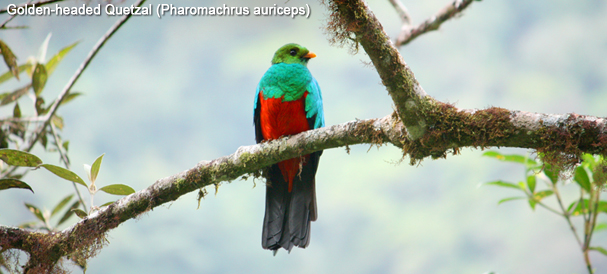
Birding Northern Peru

BIRDWATCHING NORTH OF PERU & BIRDING PERU
The World´S Greatest Center Of Endemic Birds

Amazon Birding Northern Peru birding tour explores a less-often-visited part of one of South America´s premier birdwatching countries. This exciting tour focuses on the many species found in the northern part of Peru, home to numerous specialities, including White-winged Guan and the extraordinary Marvelous Spatuletail.

One of the topographically most complex countries on earth, Peru boasts an immense avifauna adding up to a staggering total of over 1817 species. While most Peruvian bird tour itineraries omitting almost the entire northern half of this huge country, South American bird addicts have always longed to explore the «unknown» regions of this fabulous land.

No country has seen the discovery of more birds new to science in the last few decades than Peru has, and in the late seventies and early eighties new species were described at an average rate of two per year. Since they were usually found in isolated mountain ranges and remote areas, the full scale expeditions that led to their discovery greatly increased our knowledge of South American birds in general, and more was learnt about many birds that until then were only known from a few old specimens. Notwithstanding, many of the country´s birds are still poorly known, and there are still several species of which practically nothing is known in life.

This adventurous tour focuses on the largely mountainous northern tier of the country, a fantastic treasure chest of endemic, ocalized and little-known birds. With a mountainous backbone sliced up by the mighty Maranon River and its tributaries, this region is a biogeographic jigsaw puzzle that still hasn´t given up all its secrets. Our journey will take us from the Western Cordillera of the Andes into the breathtaking Maranon Canyon, where the headwaters of the Amazon run through an arid mountain valley for over 600 miles (1000km), and from there to the forested mountainsides of the outlying eastern slopes of the Andes. Finally we will explore the deserts and foothills along the Pacific coast. During our travels we will search for some near-legendary species. Whilst focusing on the many specialities, we will also see a large variety of more widespread birds and enjoy some scenery that is among the most spectacular in the continent.

Starting out in the colonial city of Chiclayo to Tarapoto

The world´s most spectacular hummingbird, the amazing Marvelous Spatuletail. Not far away, Owlet Lodge will be our base for exploring the diverse birdlife of the cloudforests on the jagged mountain ridges of Abra Patricia and the luxuriant foothill forests of Afluente lower down. Here we will look for such legendary birds as Royal Sunangel, Cinnamon-breasted Tody-Tyrant and Bar-winged Wood-Wren, while also sampling the rich east Andean cloudforest avifauna, including scores of colourful tanagers. Lower down, the foothill forest holds the endangered Ash-throated Antwren and the San Martin form of the Mishana Tyrannulet, which may represent a distinct species.

Retracing our footsteps into the Utcubamba Valley, we will look for yet more Maranon endemics near Jaen. Eventually we will descend into the Pacific coastal lowlands and adjacent foothills where, in addition to searching for the famous White-winged Guan, we will look for Peruvian Plantcutter, the rare Russet-bellied Spinetail, Piura Chat-Tyrant, Rufous Flycatcher and a number of other desert and deciduous forest specialities.

Amazon Birding: less driving more birding!

Accommodation & Road Transport: The hotels/guesthouses are mostly of normal Amazon Birding standard. The hotels are simple but adequate, while the lodge at Huembo and the Owlet Lodge at Abra Patricia are surprisingly pleasant with good food and comfortable beds (each bathroom is shared between two rooms at Owlet Lodge). Road transport is by coach and roads are very good asphalt

Important: No camping is required on our tour, yet no sites are missed as a result.

Walking: The walking effort is mostly easy to moderate, but there are two optional harder walks at Abra Patricia.

Climate: Rather variable. At low and middle elevations many days are warm or hot, dry and sunny, though on other days it can be cool and overcast. At high altitudes conditions range from cool to decidedly cold in the early morning. It may well rain at times and it will be rather humid at lower altitudes.

Bird Photography: Opportunities are worthwhile.
Linkable Amazon birding: 
Central & Southern peru

NORTHERN PERU-TUMBES AND MARANON ENDEMICS
THE LONG WHISKERED OWLED AND MARVELOUS SPATULATAIL
PACIFIC COAST, DRY DECIDOUS FOREST, CLOUD FOREST
AND THE MARANON

TOUR DETAILS
NORTHERN PERU-CHICLAYO to TARAPOTO
ACROSS THE TUMBES AND MARANON ENDEMICS

  • Length: 16 days
  • Starting city: Lima
  • Ending city: Lima
  • physical difficulty: Easy to Moderat
  • Focus: Birding
  • Group size limit: 9

TOUR ITINERARY : 16 DAYS BIRDING.

Day 0: Fly to Lima

Depending on arrival time in Lima we either transfer to your hotel in Lima or connect to Cusco.

Day 02 – 03Olmos.

Today we´ll drive two hours to our Hotel in Olmos where we are going to spend two nights.
Here we´ll bird the Bosque pomac Reserve, Quebrada Frijolillo and the protected Algarrobo woodland for Tumbes Swallow, Rufous Flycatcher, Necklaced Spinetail, Peruvian plantcutter, Baird´s Flycatcher, Superciliated Wren, Coastal Miner, Black-faced Ibis, Purple-collared Woodstar, Tumbes Hummingbird, Amazilia Hummingbird, Long-billed Starthroat, Short-tailed Woodstar, Oasis Hummingbird, Peruvian sheartail, little Woodstar. Other specialists here include Sulphur-throated and Cinereus Finch, Tumbes Tyrant, Tumbes Sparrow, Scarlet-backed Woodpecker, Gray-breasted Flycatcher, Gray and Gold Warbler, Sooty-capped Flycatcher, Gray and White Tyrannuled, White-Winged Guan, White-winged and White-headed Brush-finch, Elegant Crescentchest, Red-masked Prakeet, Golden-olive Woodpecker, Guayaquil Woodpecker, Streak-headed Woodcreeper, Plumbous-backed Thrush, Henna-hooded Foliage-gleaner and many more species.
Before goint to bet we´ll do some Owling for Peruvian Screech Owl and Scrub Nightjar. B:L:D

Day 04 05 and 6: Gotas de Agua (Jaen)

Driving times between the places are 2 hours from Olmos to Abraporculla, 4 hours from Abra Porculla to Jaen, 1 hour from Jaen to Gotas de agua.
Today we´ll drive 7 hours from Olmos to Gotas de agua, including selected birding stops along the way for Piura Chat-tyranr, Black cowlet Saltator, Andean Tinamou, Three-banded Warbler, Bay crowned brush-finch,Chapman´s Antshrike,Ecuadorian Piculet, Rufous-necked Foliage-gleaner, yellow-bellied and Black and White Seedeaters.

Every day we´ll have full birding with Maranon Endemics including: Maranon Crescentchest, Maranon Slaty Antshrike, Buff-bellied Tanager, Chinchipe Spinetail, Sooty-crowned Flycatcher, Maranon pinetail, Maranon Thrush, Yellow-cheeked Becard, Speckle-breasted Wren, Black-capped Sparrow, Tataupa Tinamou, Military Macaw, Little Inca Finch, and many more, we´ll visit rice fields to look for Spotted Rail and Paint-billed Crake. Up the Uctubamba River, keeping an eye out for Fasciated Tiger-heron and Torrent Duck. We´ll spend three nights in Gotas de Agua private Reserve. B:L:D

Days 7, 8 and 9: Huembo Lodge.

We´ll drive for six hours (including birding) from Gotas de Agua to Huembo Lodge. Here we may see the famous: Marvelous Spatulatail at the Lek (A communal breading display performed by males to attract females). Some hummingbirds visit the feeders in the garden like Little Woodstar, White-bellied Woodstar, Chestnut-breasted Coronet, Collared Inca, Mountain Velvetbreast and more. We may also explore some trails with good patches of cloud forest remain and some of the possibilities here that we have seen in the past include: Torrent Duck, Speckled Hummingbird, Golden-headed Quetzal, Versicolored Barbet, Gray-breasted Mountain Toucan, Strong-billed Woodcreeper, White-tailed and White-banded Tyrannulets, Inca Flycatcher, Chesnut-crested Cotinga, White-capped Tanager, White-collared Jay, Andean Solitaire, Silver-backed and Green-throated Tanagers plust lots more. We´ll spend three nights in Huembo Lodge. B:L:D

Day 10, 11 and 12: Owlet Lodge.

Birding and driving from Huembo Lodge to Owlet Lodge will take about four hours. Staying three nights at this beautiful lodge will give us access to an extensive trails system enabling us to look for Antpittas and do some Owling in the garden for White-throated Screech Owl and Rufous-banded Owl. One of the trails will give us access to several territories of the rare and almost mythical endemic Long-Whiskered Owlet.

We may bump into mixed flocks with Blue browed, Metallic-green and other Tanagers, exploring side trails we may see the newly described Johnson´s Tody-tyrant, Tyranine woodcreeper, Spotted and Rusty-winged Barbtails and many more target birds like Ash-throated Antwren, Cinnamon-breasted Tody-Tyrant, Bar-winged Wood-Wren, Royal Sunangel, Equatorian Graytail, White capped and Scaly-naped Parrots, White Capped Tanager, Wedge-billed Hummingbird, Crimson-mantled Woodpecker, Montane woodcreeper. We may hear (or see if are lucky) Ochre-fronted and Rusty-tinged Antpittas, Long-tailed Antbird, Large-footed Tapaculo, Golden-faced Tyrannulet, Sulphur-bellied Tyrannulet, Ecuadorian Tyrannulet, Fiery-throated and Scaled Fruiteaters, Andean Cock of the Rock, Lanceolated Monklet, Fine-barred Piculet, Barred Becard, Sharpe´s Wren, Black-created Warbler, Bicolored Antvireo and many more. Night birding should be good here with Lyre-tailed Nightjar, Rufous-bellied Nighthawk and Cinnamon Screech Owl all possible. Three nights at Owlet Lodge. B:L:D

Day 13, 14 and 15: Moyobamba.

Driving and birding from Owlet Lodge to Moyobamba will take us about five hours. Through beautiful upper tropical forests, new and exciting birds will be possible with excellent chances of seeing the Speckle-chested Piculet, Ecuadorian Piedtail, Black-bellied Tanager, Yellow-throated and Ashy-throated Bush Tanagers, Yello-breasted Antwren, Gray-mantled Wren, Ruddy and Plumbeous Pigeons, White-eyed Parakeet, Red-billed Parrot, Black-mandibled Toucan, Golden-olive and Smoky-brown Woodpeckers, Olivaceous and Olive-backed Woodcreepers, Ash-browed Spinetail, Montane and buff-fronted Foliage-gleaners, Streaked Xenops, Lined Antshrike, Plain Antvireo, Rufous rumped Antwren, Blackish Antbird, White-crowned Tapaculo, Golden-winged Manakin, Slaty-capped, Ornate and Olive-chested Flycatchers, Marble-faced Bristle-Tyrant, Plumbeous-crowned and Ecuadorian Tyrannulets, Northern Slaty Antshrike, Bluish-fronted Jacamar, Sulphur-bellied Tyrant-Manakin, Speckled Chachalaca, Blue Ground-Dove, Ferruginous Pygmy-Owl, Blue-crowned Trogon, Blue-crowned Motmot, Black-fronted Nunbird, Planalto Hermit, Chestnut Eared and Lettered Aracaris, Lafrensnaye´s Piculet, Plain-crowned and Chestnut-throated Spinetail´s, Stripe-chested Antwren, White-browed Antbird, White-bellied Pygmy-Tyrant, Boat-billed and Piratic Flycatchers, Black-and-white Hawk Eagle, Mouse-colored Antshrike, Undulated Antshrike, Chestnut-headed Crake, Ashy-headed Greenlet and many more. Three nights in Moyobamba. B:L:D

Day 16: Tarapoto – Lima

After our last morning of birding, we´ll have an afternoon drive of two hours from Mollobamba to tarapoto to catch an evening flight back to Lima (one hour and 15 minutes). Overnight in Lima. B:L:D

Day 17: Flight back Home.

TRIP CONSIDERATIONS

Accommodation & Road Transport: The hotels/guesthouses are mostly of normal Amazon Birding standard. The hotels are simple but adequate, while the lodge at Huembo and the Owlet Lodge at Abra Patricia are surprisingly pleasant with good food and comfortable beds (each bathroom is shared between two rooms at Owlet Lodge). Road transport is by coach and roads are very good asphalted.

Important: No camping is required on our tour, yet no sites are missed as a result.
Walking: The walking effort is mostly easy to moderate, but there are two optional harder walks at Abra Patricia.
Climate: Rather variable. At low and middle elevations many days are warm or hot, dry and sunny, though on other days it can be cool and overcast. At high altitudes conditions range from cool to decidedly cold in the early morning. It may well rain at times and it will be rather humid at lower altitudes.

Bird Photography: Opportunities are worthwhile.
Linkable Amazon birding: Central &Southern peru

What to Bring
We advise you to bring:

Aside from Binoculars and photo-equipment (the important birdwatchers stuff) we advise:

  • A spotting scope, if you have one
  • Flashlight for night birding
  • Light day pack
  • Sunscreen and insect repellent
  • T-shirts and a long-sleeved shirt
  • Jeans or other cotton pants are comfortable, as well as quick-drying nylon ones
  • Cotton socks
  • Sweater, jacket or fleece for night birding
  • Light jacket, water resistant, or poncho
  • Hiking boots or sturdy shoes
  • Sandals for after hours
  • Hat and sunglasses
  • Plastic bags for camera, clothes, etc. Personal toiletries (shampoo, towel, etc)

Amazon Birding look forward to welcoming and guiding you soon!
Last minute bookings will be accepted but you must be aware that there is the possibility that we will not get space at the hotel or tour that you need.

PLEASE CHECK OUR NORTHERN PERU BIRD LIST
PLEASE CONTACT US IF YOU HAVE ANY QUESTIONS.
AMAZON BIRDING: Conservation through bird-ecotourism.