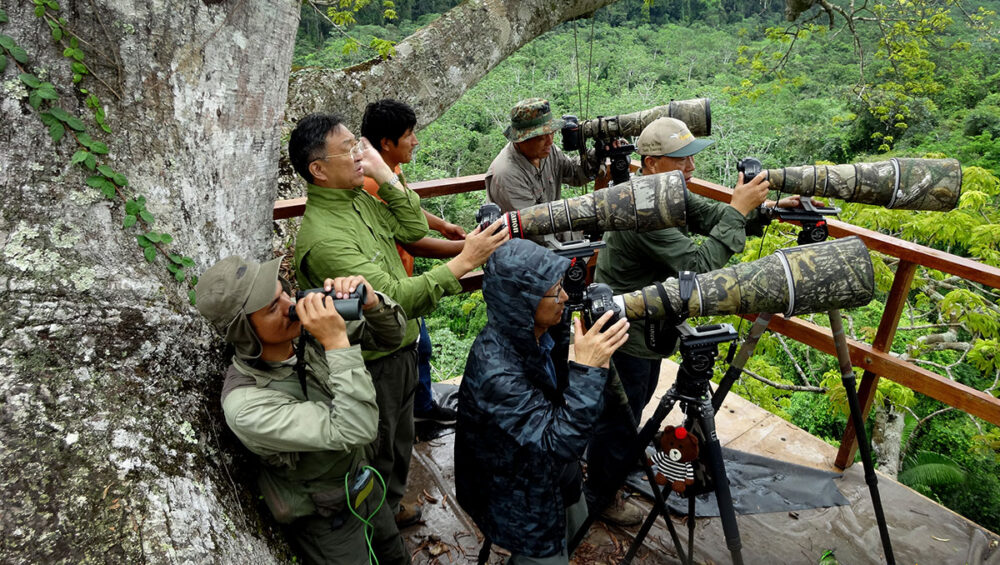
Traveling to Manú with professional camera gear is a commitment to both art and nature. Beyond your camera body and favorite glass (where a 400mm or 600mm zoom is king to avoid invading wildlife’s personal space), protection is the name of the game. The jungle’s humidity is a constant challenge; therefore, high-quality dry bags and waterproof covers for your gear are indispensable. A pro tip from the field: always carry microfiber cloths and silica gel packets to combat the fogging that happens on your lenses when stepping off a boat or leaving your lodge room. The jungle is unforgiving with moisture, but it rewards those who care for their equipment.
However, the best tool you can bring won’t fit in your suitcase: patience. In the Manú National Reserve, magic doesn’t follow a schedule. You might spend hours surrounded by the symphony of hundreds of bird species—from the vibrant Andean Cock-of-the-Rock to elusive woodcreepers—waiting for that one fleeting moment.
We recommend bringing plenty of spare batteries and high-speed memory cards. There is nothing more frustrating than witnessing a family of Giant Otters playing in the river or a Macaw soaring across an orange sky only to find you’ve run out of storage. Here, every second offers a new composition.
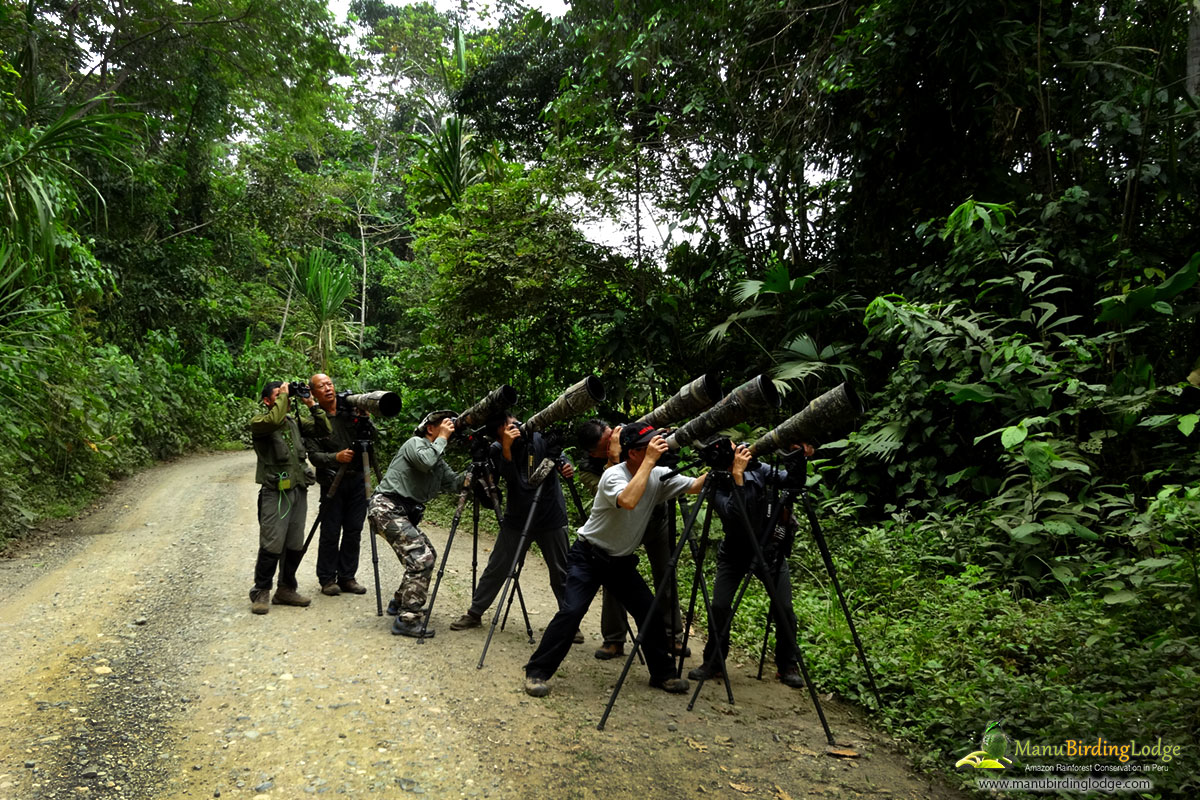
Respect for the environment is what separates a tourist from a true Amazon Birding explorer. When visiting these pristine areas, the golden rule is invisibility: «Take only photos, leave only footprints.» It is vital to maintain silence on the trails and respect the minimum safety distances indicated by our guides. Remember, we are not in a zoo; we are guests in the home of the Otorongo and the Harpy Eagle. The use of drones is restricted to prevent stress to birds, and every action we take must align with our core principle of conservation through ecotourism.
The biodiversity of Manú is both overwhelming and fascinating. Prepare yourself for an innumerable variety of species: from river dwellers like the Black Caimans patrolling the banks to the explosion of color at the clay licks. Carrying high-end binoculars (ideally 8×42 or 10×42) is essential even if you are a photographer, as they allow you to track movement in the canopy before you even aim your lens. This direct visual connection allows you to appreciate the complexity of the rainforest while you wait for the perfect frame.
Finally, traveling consciously means understanding that your presence supports the local economy and the preservation of thousands of hectares of forest. By choosing this destination, you become a guardian of the Amazon. We suggest bringing biodegradable repellent and eco-friendly sunscreen to ensure we don’t leave chemical residues in the water bodies we so admire. Come ready to disconnect from the digital world and reconnect with life in its purest state. In Manú, photography is the language we use to say that this paradise deserves to be eternal.
«What is the one piece of gear you never leave behind on a wildlife expedition?